Chapter 46 – The Fattening Farm
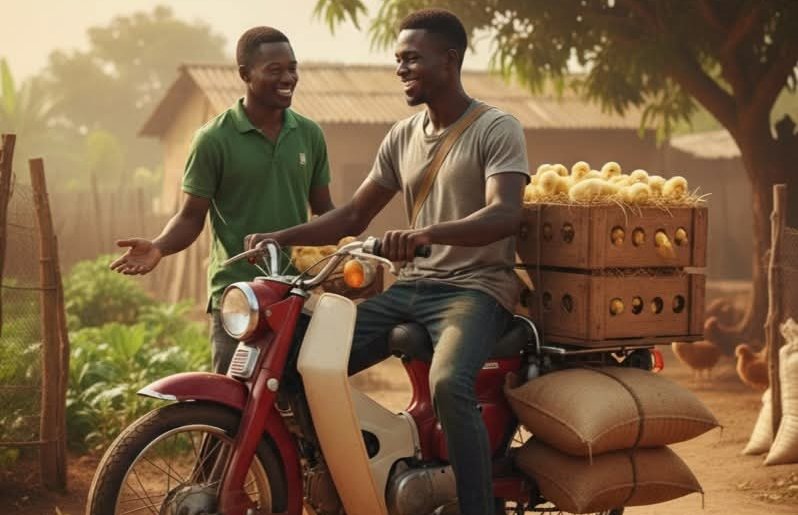
In Beto's spacious backyard, under the shade of mango trees, cleared thickets sprang up to receive the chicks from the incubator. It was there that the final stage of production would take shape: fattening.
Beto organized the space into sections: on one side the newly arrived chicks, on the other the growing birds. He used simple waterers made from cut-up bottles and improvised feeders made from cans, always kept clean to prevent disease.
Feeding was the secret. Following PROSPERAR's guidelines, Fito brought growth feed, mixed with cracked corn and bran. Little by little, Beto learned to calculate the cost per bird: how much it ate, how much it grew, how long it took to reach market weight (1.5 kg on average).
Each week, he weighed some of the birds to track their weight gain. He felt proud to see the frail chicks of just days before transform into robust chickens, ready for sale.
"It's daily work, but it's worth it. Here's our profit, even if it's just growing," he told his friends.
The backyard, once just bare earth, was now teeming with life. Beto understood that he wasn't just fattening chickens, but fattening opportunities.
Practical lesson for the young reader: gaining weight requires organization — a clean space, a balanced diet, and time management until reaching the desired weight.
You Can: A simple backyard can be transformed into an income-generating factory.