
The inspiring story of Salimo, a young man who left the streets to become a small business owner in poultry farming.
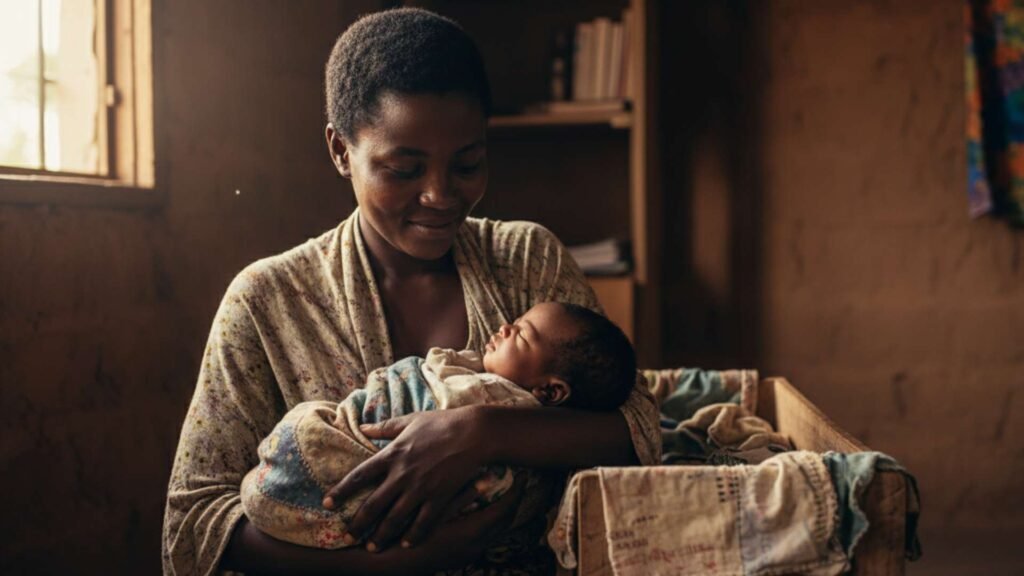
Salimo was born on a silent dawn, without a celebration, without an announcement, without a newspaper entry. Only his fragile cry echoed through the mud house, mixed with the exhaustion of a mother who, despite her poverty, harbored a rare glow in her heart: hope.
He had no layette. His clothes were donated, and his makeshift crib was a wooden box lined with old cloths. Still, there was something precious in the air: every time she rocked him, she whispered in his ear—"You are greater than this beginning.".
In that forgotten neighborhood, where rain seeped through rooftops and the sun burned cracked walls, children grew up dreamless because they were taught that dreaming was a waste of time. But there was something different about Salimo. Even as a child, his eyes weren't content to gaze down at the beaten earth. He always looked ahead, as if searching for horizons no one else could see.
He was invisible to almost everyone. There were no visitors at the maternity ward, no cake on his first birthday, no expensive toys. But, in the silence of the early mornings, his mother believed. And this belief was the first inheritance Salimo would receive.
Because sometimes, what changes a destiny is not the wealth we are born into, but the strength of those who teach us to believe before we even know how to walk.
You can: It doesn't matter if your beginnings were small or invisible. What matters is the vision you carry within you. It's this vision that will make you visible to the world.
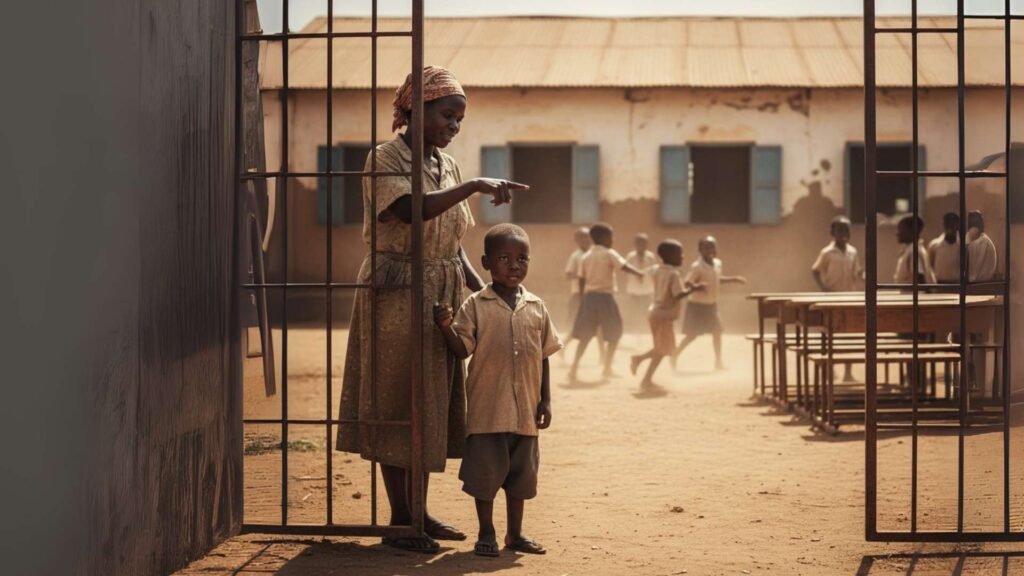
Salimo grew up surrounded by simple walls and silent dreams. His mother, firm in hope, believed there was more to her son than poverty allowed. It was she who, one sunny morning, led him by the hand to the small neighborhood school.
The building was modest, almost forgotten. The iron gate creaked, the floor was dirt, the desks scratched by generations of children who had passed through it. But to Salimo, none of this seemed an obstacle. That place, with its peeling walls and rickety windows, felt like a portal to another world.
In the courtyard, dust rose with the rush of children. Some already knew where to sit, others played as if they were at home. Salimo felt small, but a mixture of fear and curiosity arose within him.
When the teacher wrote the first letters on the board, his eyes lit up. The noise in the room seemed to disappear, leaving only the sound of the chalk and the charm of the words. Each line on the board seemed like an invitation to discover a secret.
He didn't know it yet, but he was facing one of the biggest turning points of his life. School wouldn't erase poverty, but it would plant invisible seeds within him. Seeds of the future.
You can: Every school door you pass through is also a door to the future.
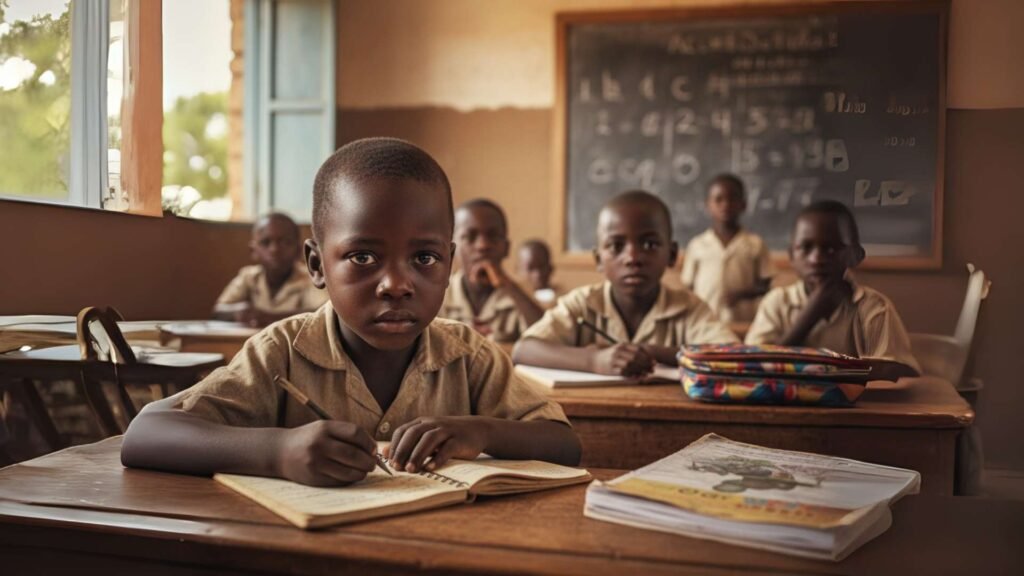
From the very first days, it became clear that there was something different about Salimo. The letters that others memorized without enthusiasm, he devoured with a sparkle in his eyes. Each word he learned was like a key that opened invisible doors. In mathematics, he discovered a pleasure in solving problems, as if the numbers were puzzles waiting for him.
But while school revealed paths to him, it also revealed the scars of inequality. While some classmates arrived with colorful lunchboxes, he often found himself with nothing but empty stomachs. While others brought new notebooks, Salimo reused crumpled pages. His pencil was small, barely reaching the eraser, but he held it like someone protecting a treasure.
His differences were noticed and sometimes used as a weapon. Some classmates laughed at his worn shoes and patched clothes. Others whispered when they saw the worn pages of his notebook. It hurt, but he wouldn't let himself be silenced. Still, he never stopped raising his hand to answer. Each time he got it right, his embarrassment lessened, and his confidence grew.
School was at once a space of pain and discovery. And in this fragile balance, Salimo began to understand that knowledge could give him something no one could take away: dignity.
You can: What makes the difference is not what you have in your backpack, but the strength you carry in your heart.
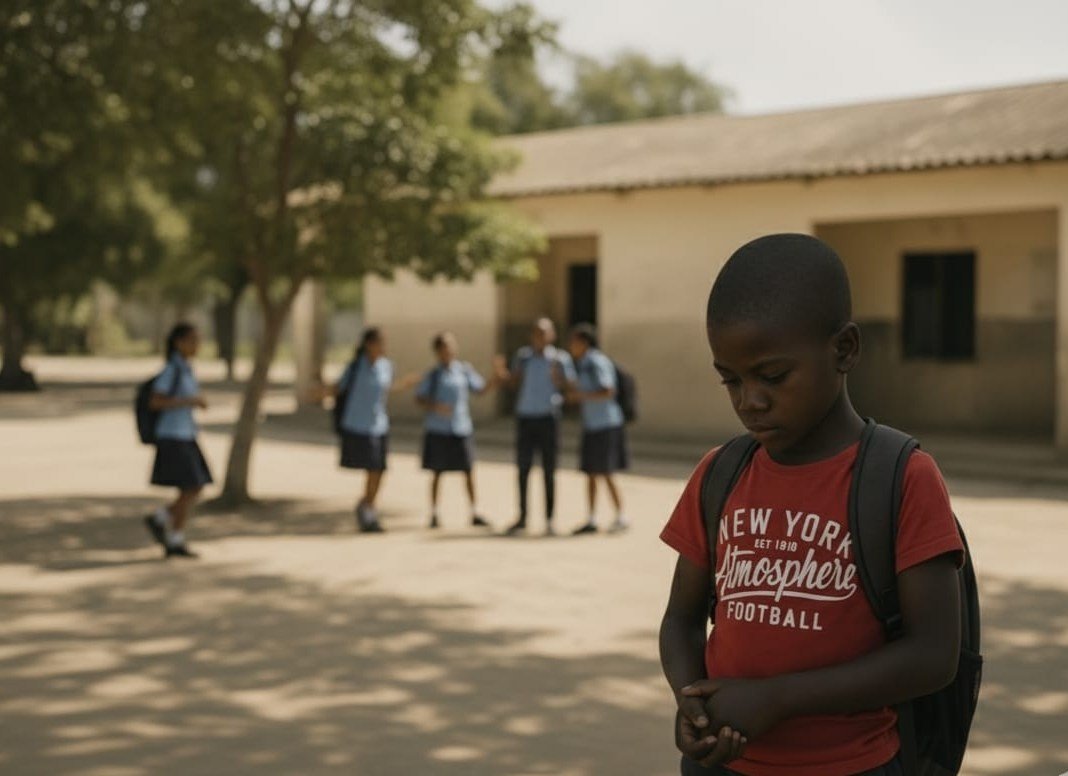
There were days when his classmates' laughter at his worn-out shoes hurt more than hunger. Other times, the heavy silence of the room seemed to remind him of all he lacked. But even so, Salimo kept the flame burning. Between the laughter of those who mocked his worn-out shoes and the stern looks of teachers who demanded more than he could give, Salimo was not easily intimidated.
With each question answered, he rose a little higher. He knew that each correct answer was like a stone placed on the bridge that would take him beyond the neighborhood. And slowly, that bridge began to take shape within him.
One day, the teacher asked each student to write down what they wanted to be in the future. Some wrote "doctor," others "police officer," and still others "teacher." Salimo took his time. He looked at the blank sheet of paper and simply wrote: "I want to be someone who doesn't give up."“
The teacher read and put the paper away, moved. To her, it wasn't just a sentence; it was a silent commitment from a boy who, even surrounded by limits, already showed greatness.
Deep down, I was beginning to realize: knowledge could be the first key to escaping invisibility. School might be simple, the backpack light, but each word learned carried the weight of the future—capable of transforming letters into wings.
You can: Knowledge may be simple, but it has the power to give you wings.
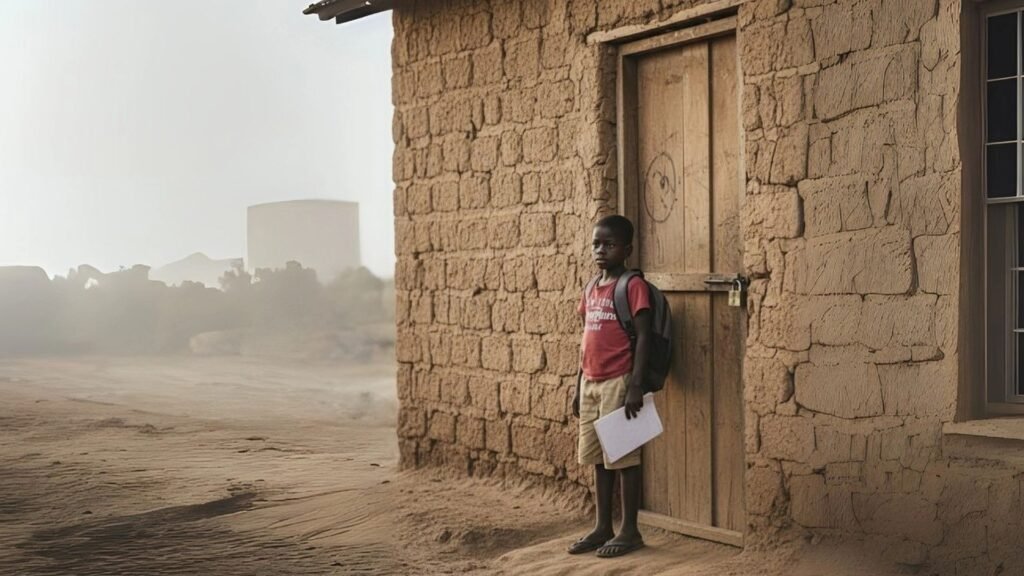
Salimo's childhood seemed to be finding some direction, but life took a sharp turn. His father, tired of losing battles against unemployment and alcohol, abandoned home. His mother, alone, could no longer support the family. Rice was scarce, the pot boiled almost empty, and the bills piled up. The mud walls began to crack, not only physically, but also in the family's heart.
Still, Salimo tried to maintain his school routine. But his empty stomach weighed more heavily than his notebook. His pencil trembled between his weak fingers. The sparkle in his eyes remained, but it was overshadowed by the weight of his hardships.
One day, when he returned from school, he found the door locked. There were no voices inside. Only silence. His mother, exhausted and without resources, could no longer care for him. That was how he discovered that sometimes life changes in an instant—without warning, without explanation.
What was left for a boy to do but accept the push of reality? That day, Salimo felt he no longer had a home. And the world, cold and immense, became his only abode.
You can: Even when everything falls apart, you can still find the strength within yourself to carry on.
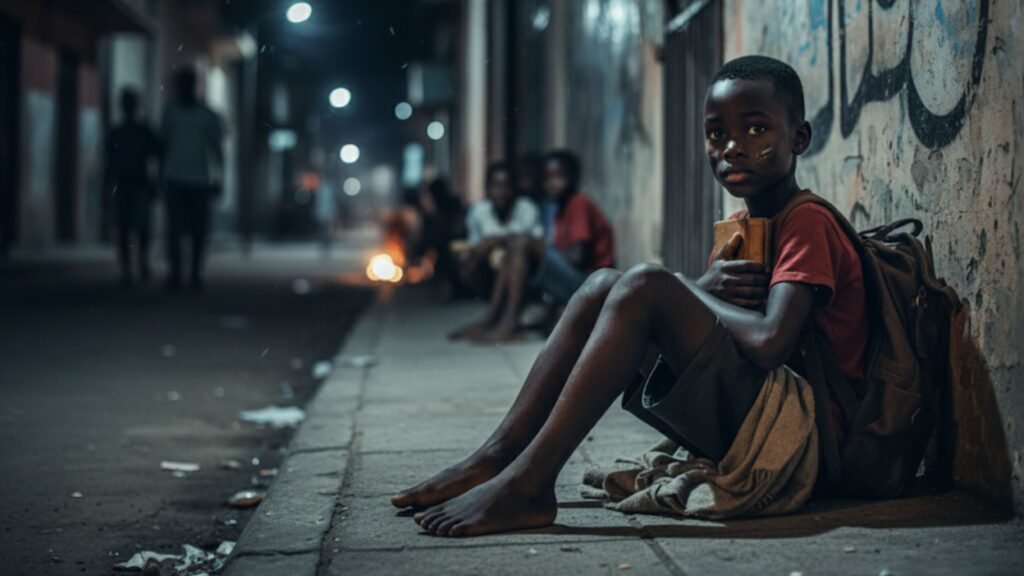
The street didn't ask permission to welcome Salimo. It was harsh from day one. The cold asphalt became a mattress, and the open sky a blanket. Night arrived with a biting cold that seemed to penetrate the bones. The day brought a merciless sun and, with it, the hunger that burned within.
He soon realized that the street had its own rules. Those who didn't learn quickly wouldn't survive. He learned where to lie down without being kicked out, how to ask for a piece of bread without humiliation, who to trust with for shade or share a torn blanket. The street, unwittingly, became his new teacher.
Among boys like him, he found an unexpected solidarity. They shared scraps of food, protected each other when their elders tried to intimidate them. But there were also dangers: gangs, indifferent police, gazes that treated them as invisible. It was necessary to always be alert.
With each passing day, Salimo realized that survival was more than just enduring cold and hunger. It was learning to keep the spark of hope alive, even when everything around him tried to snuff it out. The streets taught us quickly, but they exacted a heavy toll: they took away our innocence, our dreams, and our peace.
You can: Life can be hard, but every lesson learned can also be strength for the future.
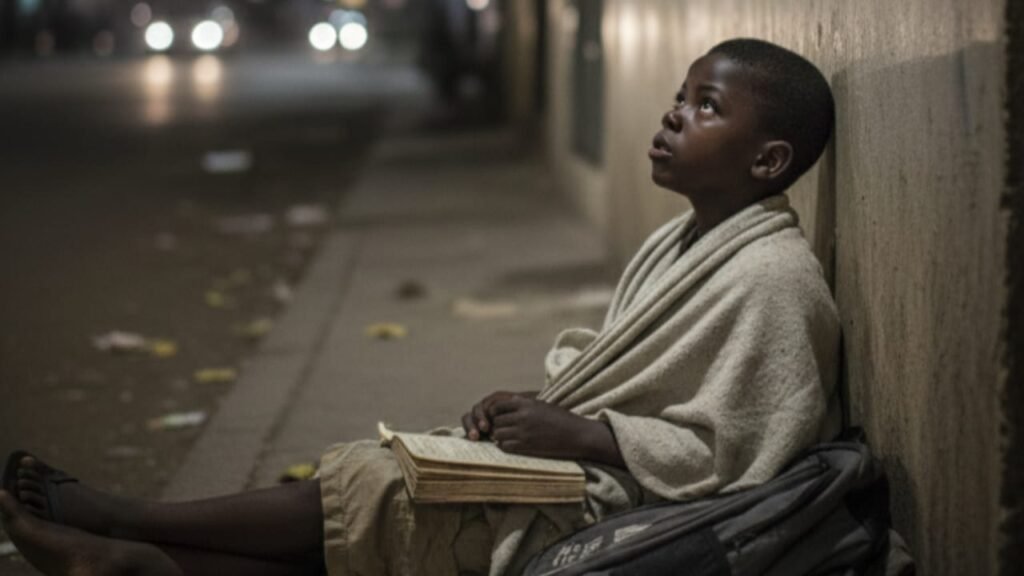
You can: Falling isn't the end. It's just the beginning of your strength to get up.
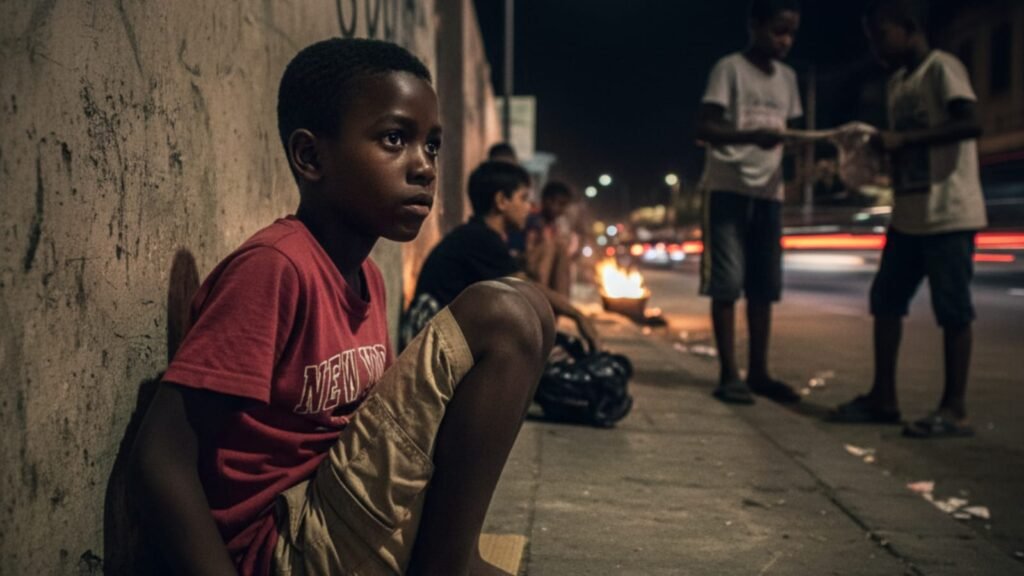
The days passed mercilessly. The streets forced Salimo to learn quickly. Hunger taught him where to look for scraps of food, the night taught him where to hide from violence, the cold taught him the value of a piece of cardboard or a torn blanket.
Every corner had its rules, and ignoring them could cost him dearly. He discovered that the street was unforgiving of distractions. He learned to negotiate a sleeping space, to keep secret short food routes, to share without losing everything.
Among the boys, there was solidarity and competition. One day, they shared a loaf of bread; the next, they fought for a more sheltered spot. Salimo realized that survival wasn't just about resisting, but also about adapting to constant change.
The street was a harsh teacher, exacting a heavy price for every mistake. But at the same time, it taught something essential: the importance of observation, of always being alert, of distrusting and trusting in the right measure.
You can: Surviving is learning the rules of the game, even when you weren't the one who chose it.
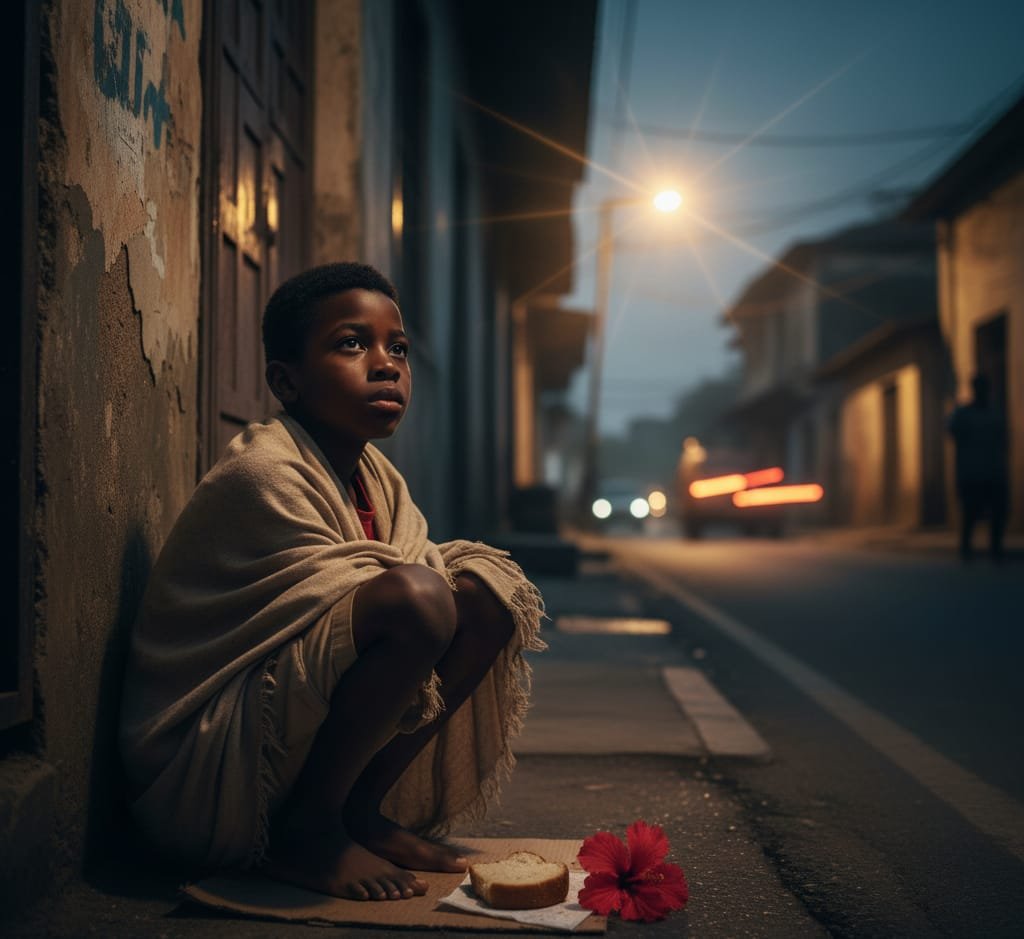
You can: Resisting hunger and cold is hard, but each day overcome is proof that your strength is greater than the pain.
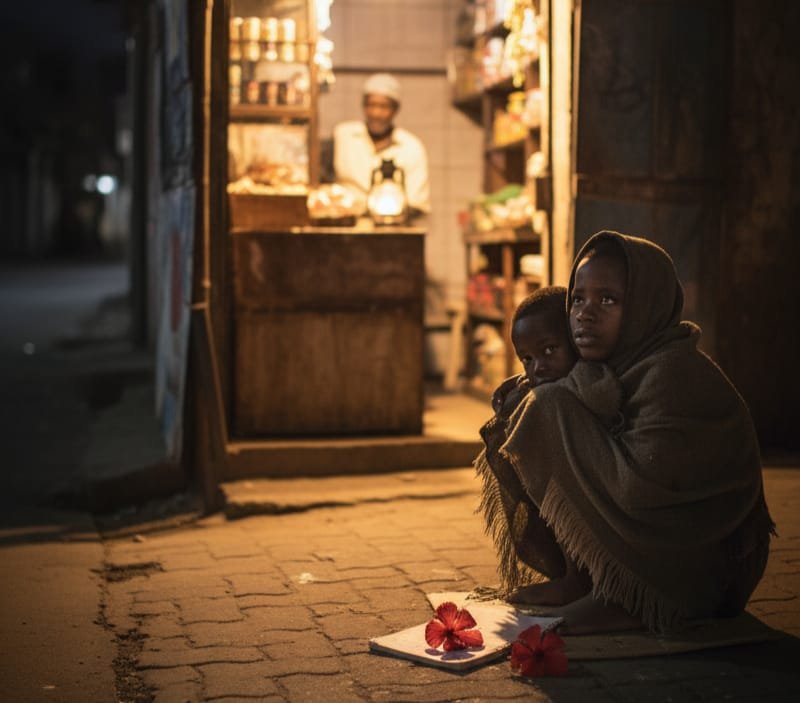
Despite all the hardships, the streets couldn't extinguish the spark within Salimo. In his darkest moments, he still found reasons to believe. A rare smile from a stranger, a helping hand from another boy, or even the simple dawn were signs that it was still worth carrying on.
One night, huddled in a corner, he heard a small child crying from the cold. Without much thought, he shared the old cloth he had with him. The boy thanked him with teary eyes, and Salimo felt, for the first time in a long time, that he could offer something, even though he had so little. This gave him a strange strength: perhaps survival wasn't just about resisting, but also about protecting the humanity within himself.
He mentally repeated some words he'd learned in school: "courage, future, hope." These words were like embers that refused to be extinguished in the wind. Each time he recalled them, it seemed to rekindle a flame.
The street taught hardship, but it also revealed that, even in the coldest and darkest place, light can be born.
Salimo began to believe that survival was just the first step. The real challenge would be to transform that spark into a fire capable of illuminating his path.
You can: Even in the darkness, a spark is enough to begin to illuminate the future.
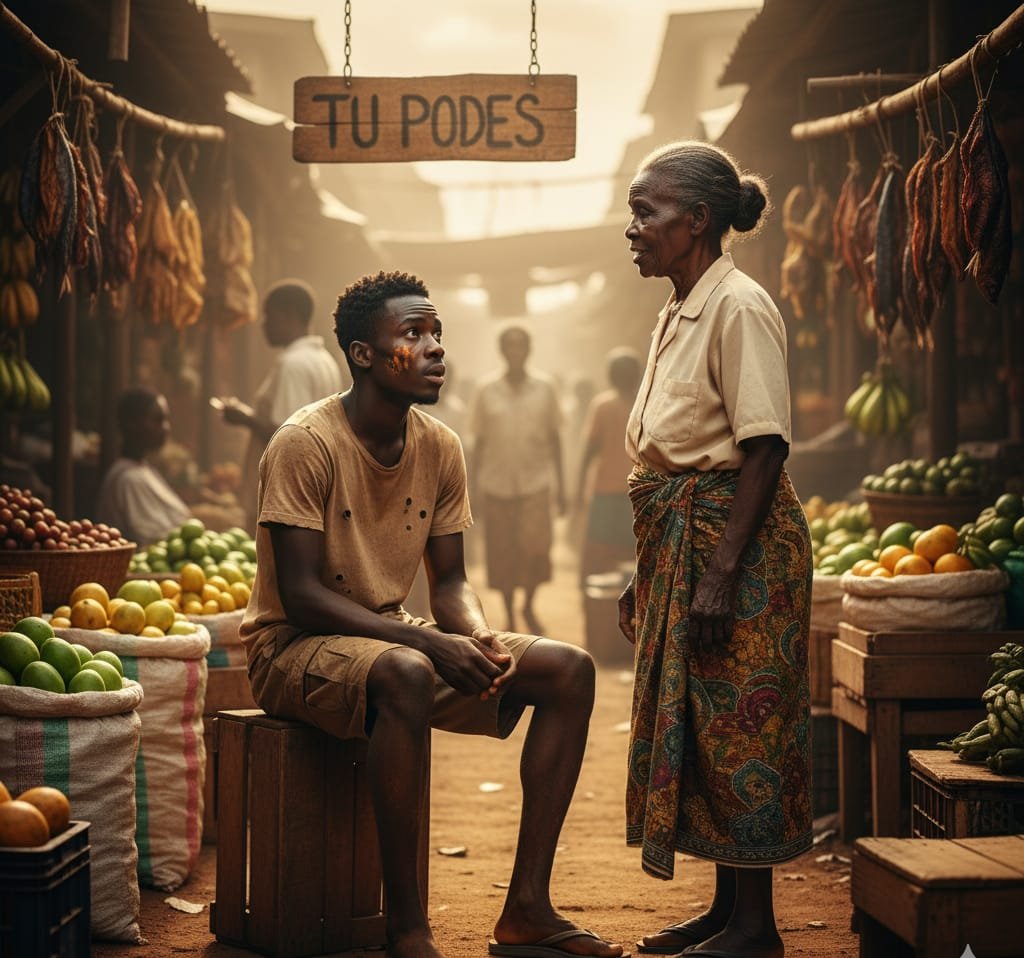
You can: Sometimes, all it takes is a voice that believes in you to rekindle what seemed lost.
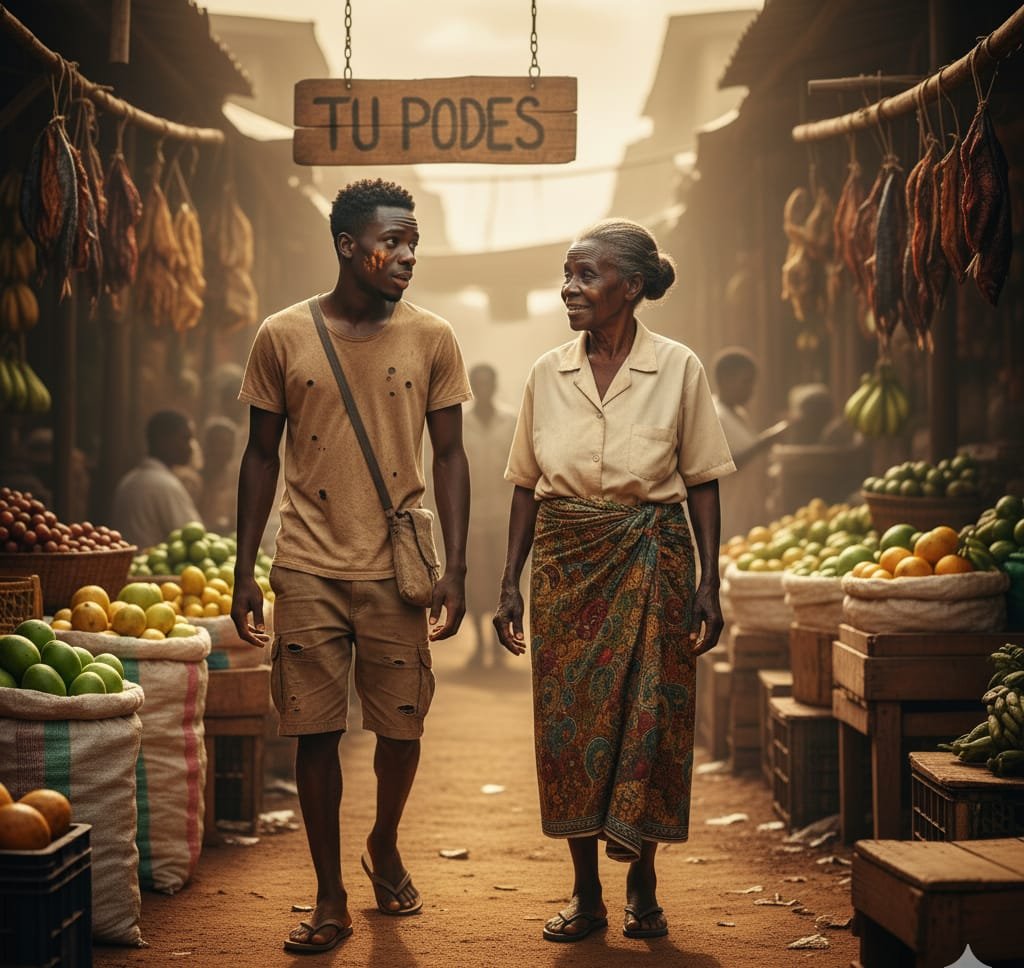
The lady's words echoed in Salimo's mind: "You can come help at my house. There will always be a plate of food."“
Simple, direct, but filled with something he hadn't known for a long time: hope.
Even so, the decision wasn't easy. The street, harsh as it was, was already familiar to him. He knew the corners where he could lie down, the places where there were scraps of food, the boys with whom he shared silence and misery. It was a cruel but predictable world. And, in a way, a boy learns to cling to what he already knows.
The lady's house, on the other hand, represented the unknown. Who was she? Could he really trust her? What if it was all a trap? Salimo was afraid of making the wrong move, afraid of being disappointed once again.
But hunger spoke louder. And, deep down, a memory returned: his mother's voice, repeating softly, as she still rocked him at home, "You are greater than this beginning." That phrase rekindled the dormant courage.
With his eyes fixed on the lady, he took a deep breath and simply said: “I will.”
At that moment, he didn't imagine it, but that "yes" would change the course of his life.
You can: The future begins when you have the courage to say “yes” to a new opportunity.
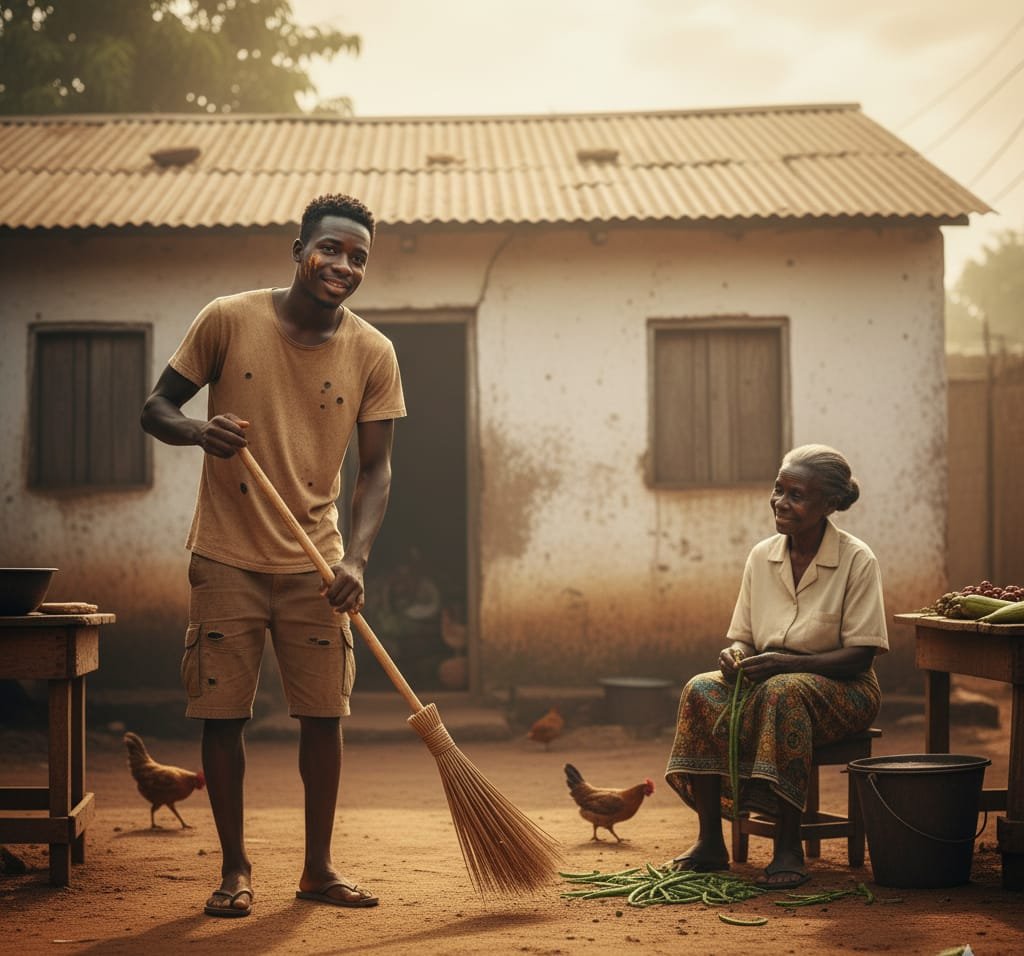
The path to the lady's house seemed short, but for Salimo it was a huge journey. Each step was a mixture of anxiety and hope. He carried nothing with him, just his thin body, his worn clothes, and the desire to start over.
The house was simple: whitewashed walls, a tin roof, and a small yard with chickens scratching around. But to someone coming in from the cold asphalt, it felt like a palace. The smell of hot food wafting from the kitchen filled her chest like a rare perfume.
The woman showed him where he could sleep: a worn but clean mattress, in a safe corner. For him, it was more than rest; it was dignity. As he lay down that night, Salimo found it hard to believe he didn't have to fight the freezing wind or fight for space in an alley.
The following days were spent adapting. The woman taught him simple tasks: sweeping, carrying water, helping with the grocery shopping. He performed each task with dedication, grateful for the opportunity. There was food, there was shelter, and above all, there was respect.
In that modest home, Salimo realized that life could offer a second chance. It wasn't luxury, it wasn't abundance, it was security. And on that foundation, the possibility of dreaming again was born.
You can: Sometimes a simple roof is enough to turn fear into hope.
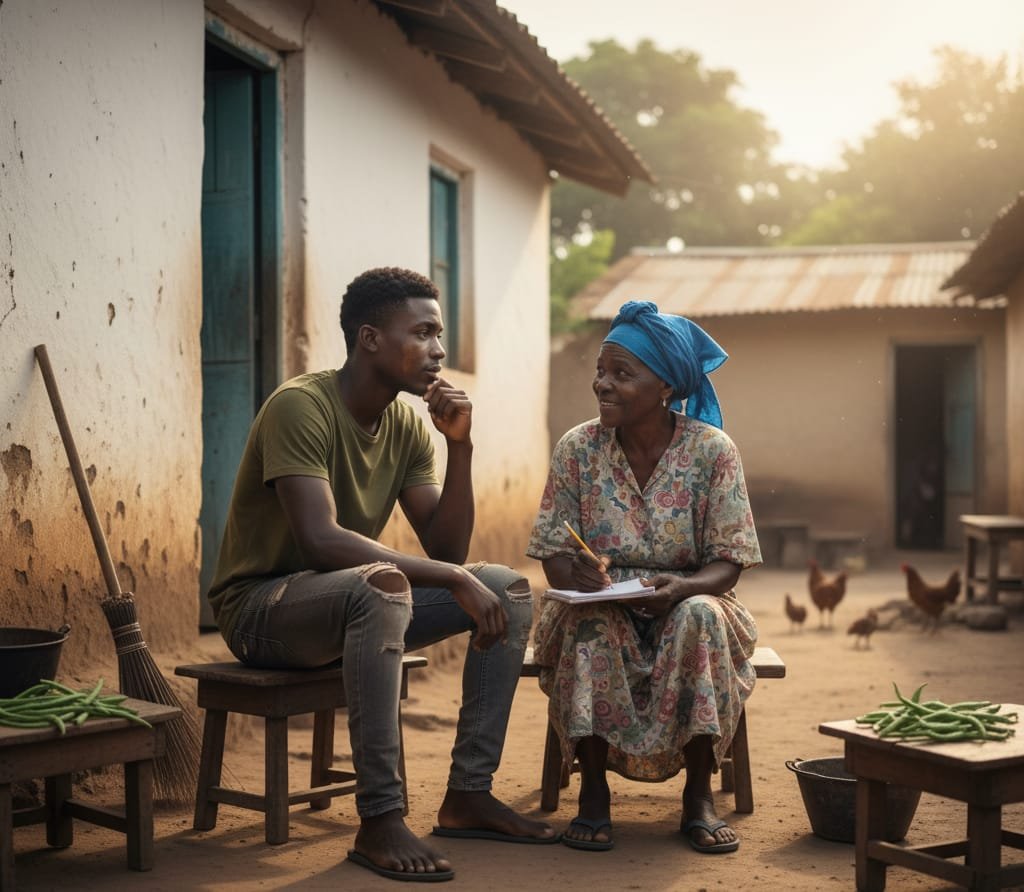
In the lady's house, there was food, there was shelter, but there was also something Salimo hadn't expected: encouragement. With each completed task, she would repeat firmly:
— “Boy, it’s not enough to fill your stomach. You have to fill your head too.”
These words awakened a dormant memory in him: his school days, his notebooks, the letters that shone before his eyes. He felt a knot in his chest; he had left that behind when life pushed him onto the street.
The lady noticed. One late afternoon, she sat down next to him and said:
— "I want you to go back to school. Housework is important, but knowledge is what will open your path."“
Salimo's heart pounded. The idea seemed bold. He feared rejection, feared the looks that would remind him of where he came from. But at the same time, he felt challenged.
That night, he struggled to sleep. Embarrassment weighed heavily on him, but he also had the urge to pick up a notebook again. He knew it would be difficult, but perhaps this was the key to finally escaping invisibility.
You can: Someone who believes in you can awaken dreams you thought you had lost.
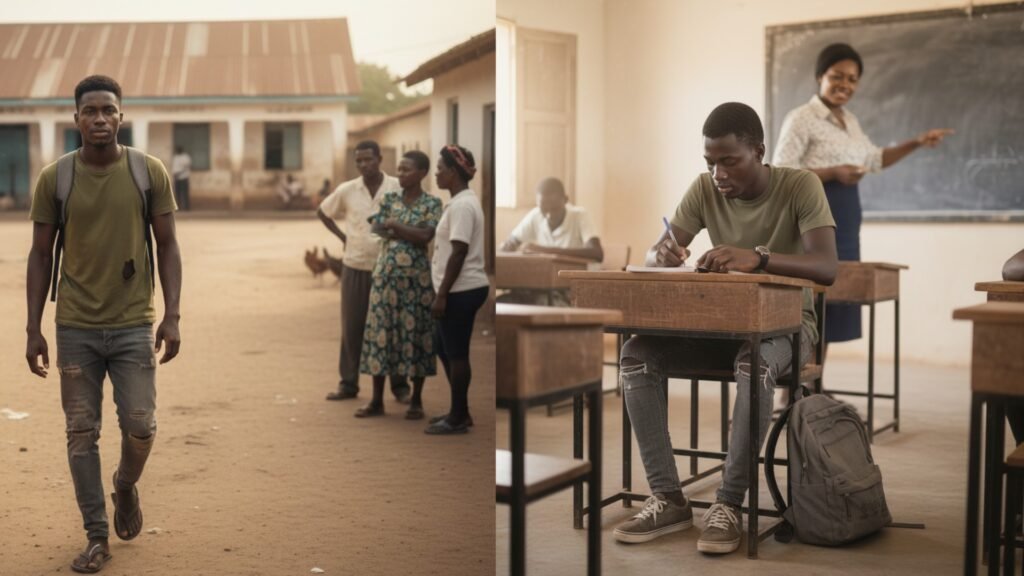
You can: Courage is not the absence of fear, it is moving forward in spite of it.
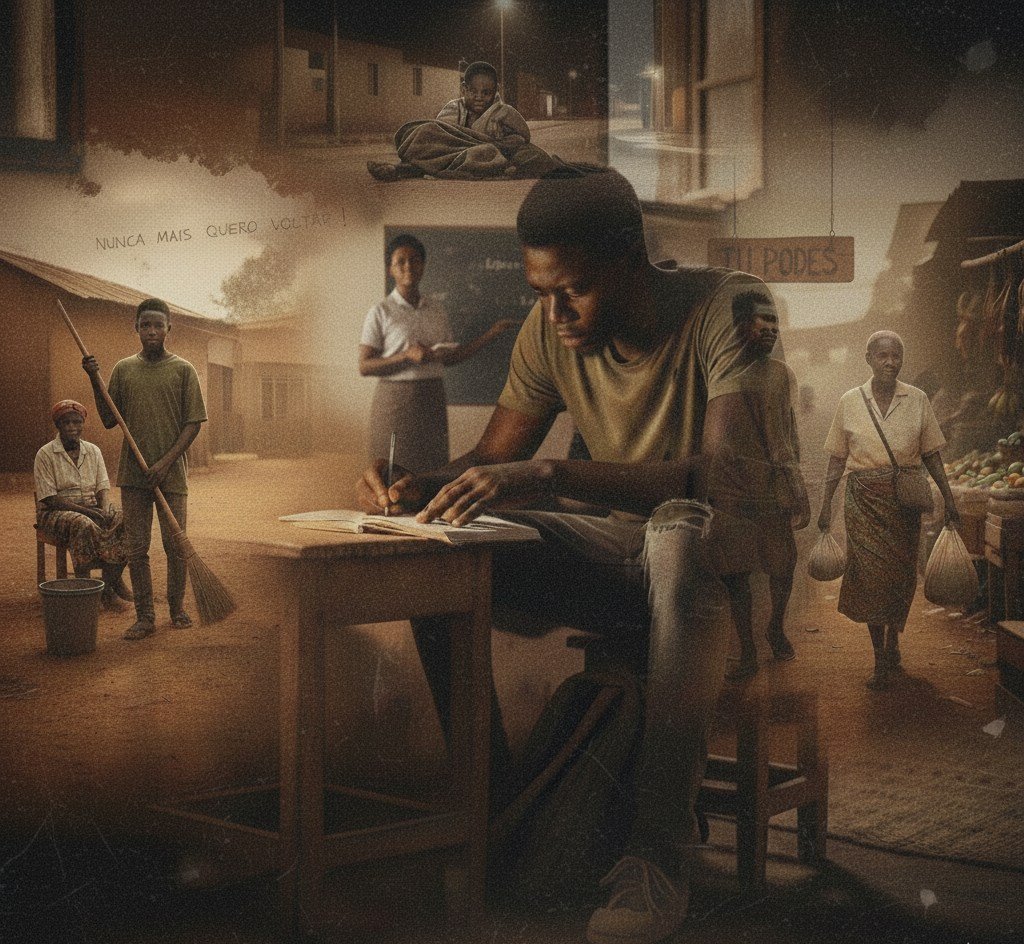
You can: When your desire is greater than your tiredness, every night of studying brings you closer to the future you deserve.
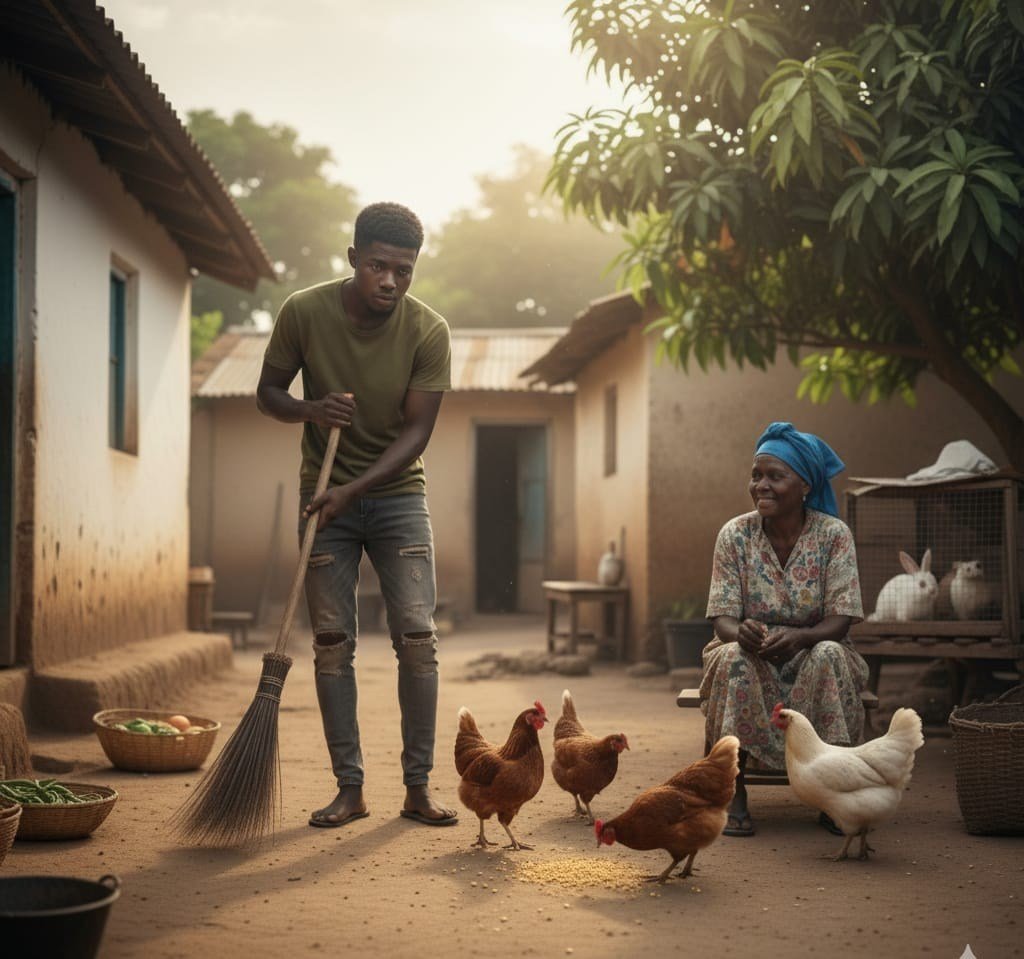
You can: Life teaches us everywhere. It's up to you to observe and transform every detail into a learning experience.
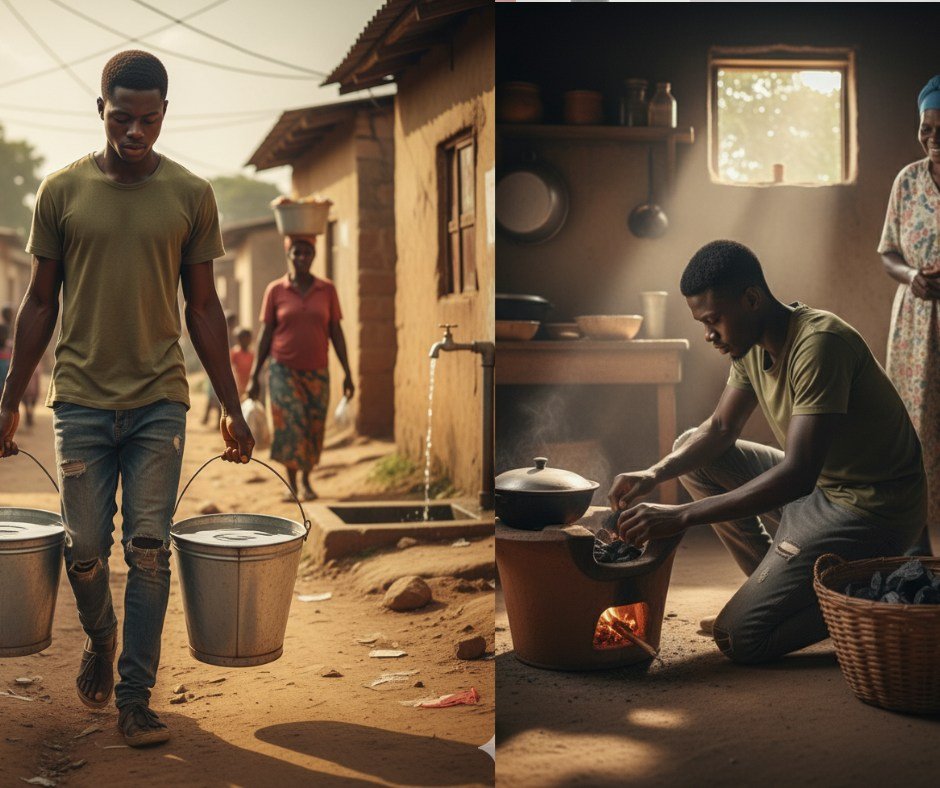
You can: Taking care of the little things is the training to achieve big dreams.
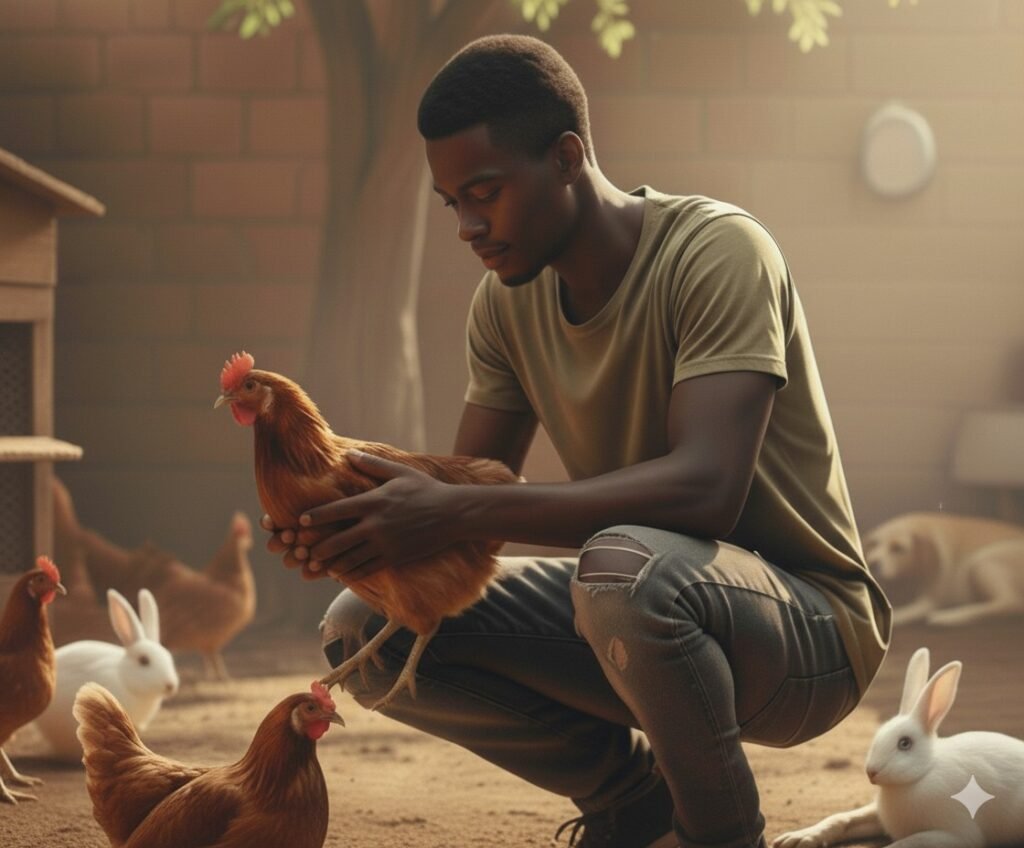
You can: Discovering what you love to do is the first step to turning work into purpose.
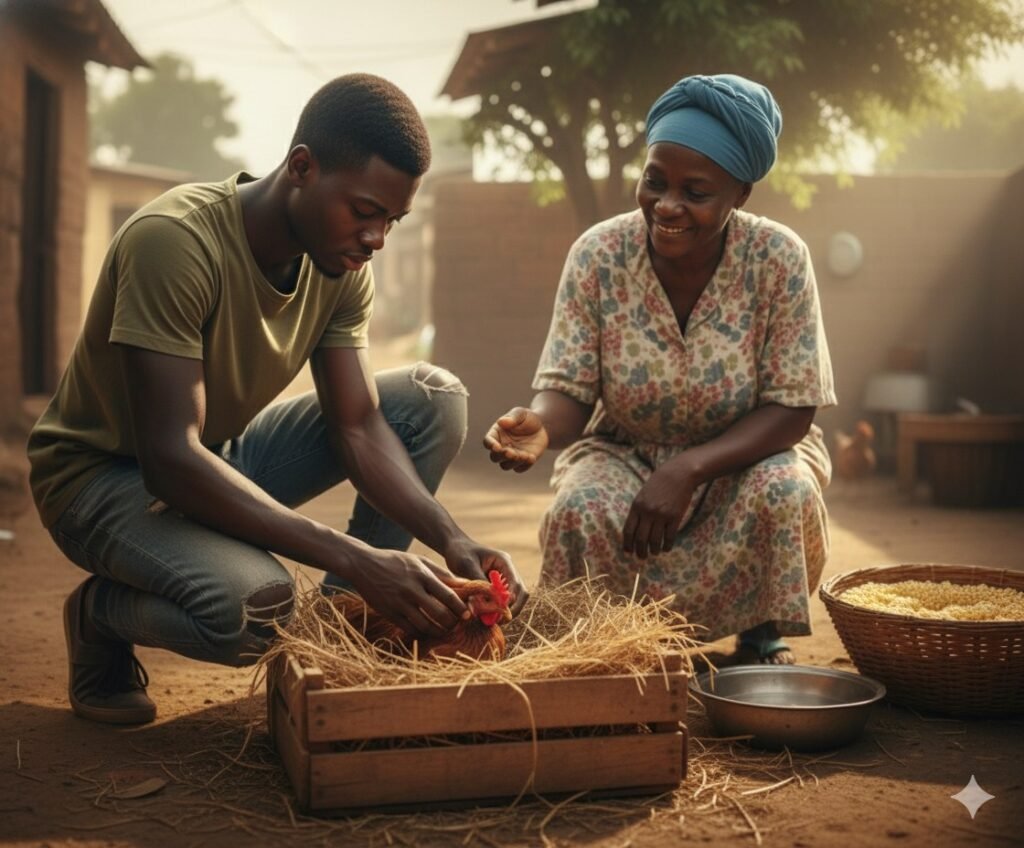
You can: Taking care of what is small prepares you to build what is big.
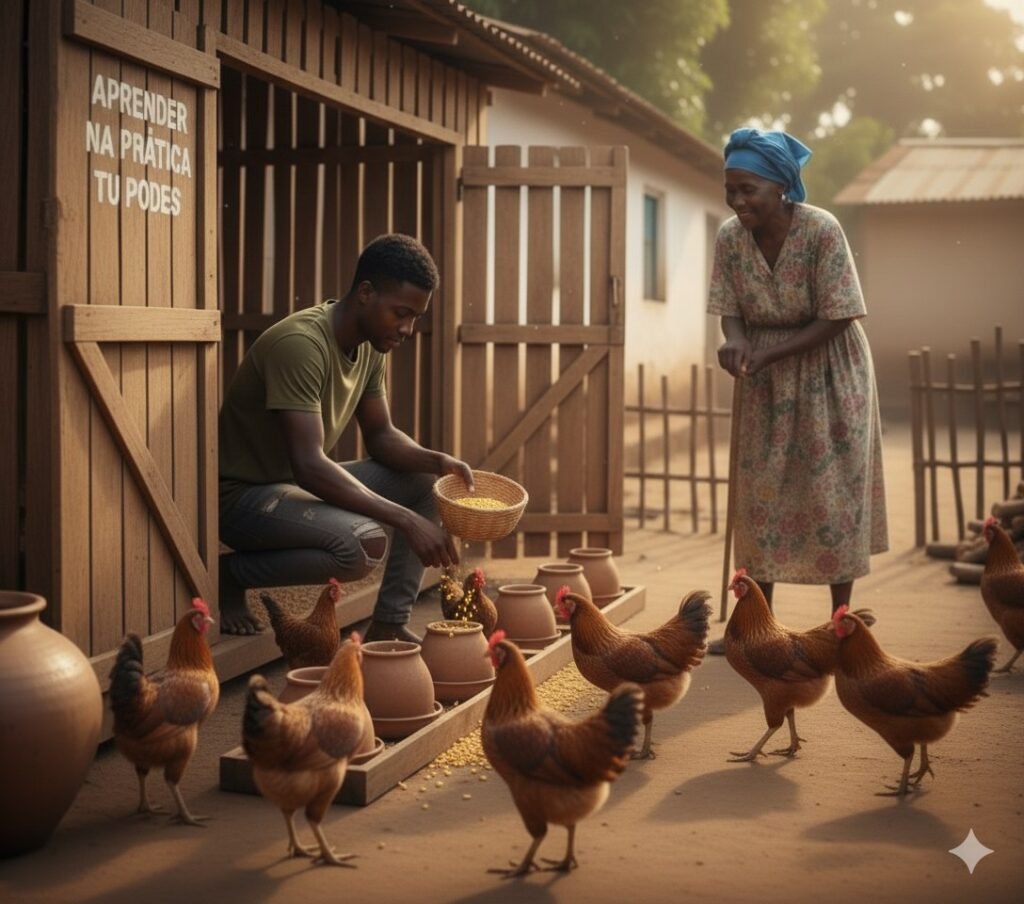
You can: Learning by doing is transforming mistakes into steps and successes into confidence.
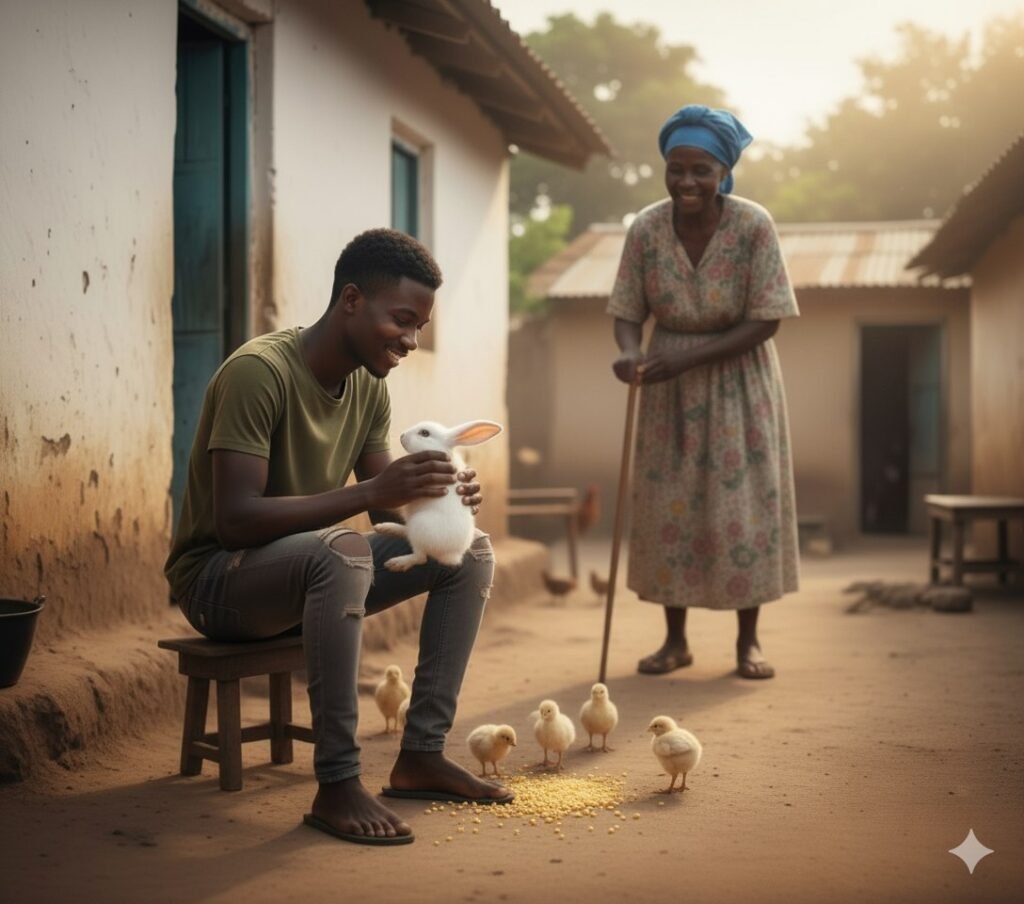
You can: When you discover that you enjoy what you do, you've already started to transform your effort into a future.
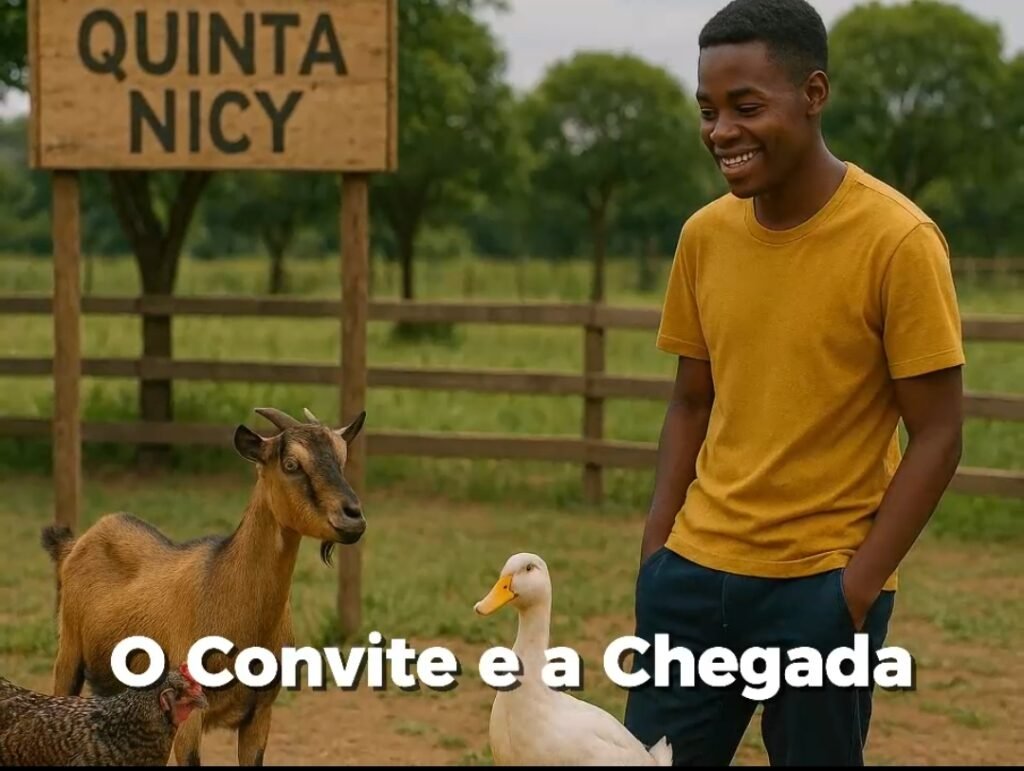
You can: When our eyes open to opportunities, our hearts learn to dream big and our minds begin to build paths.
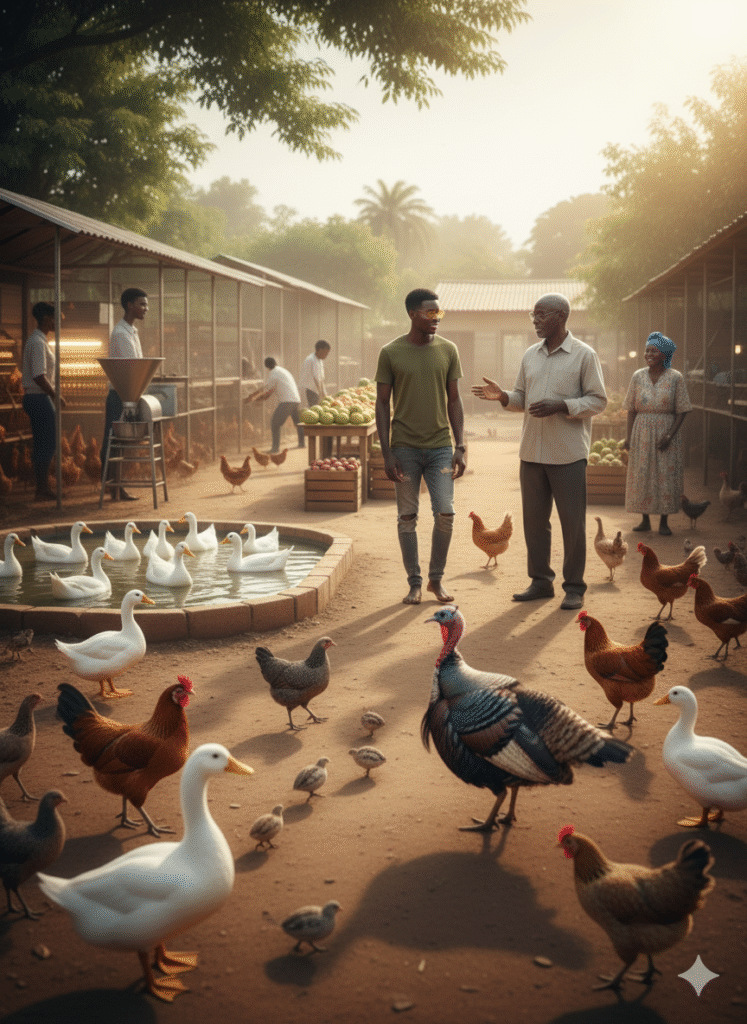
You can: Diversity is strength, the more options you explore, the more doors you open for your future.
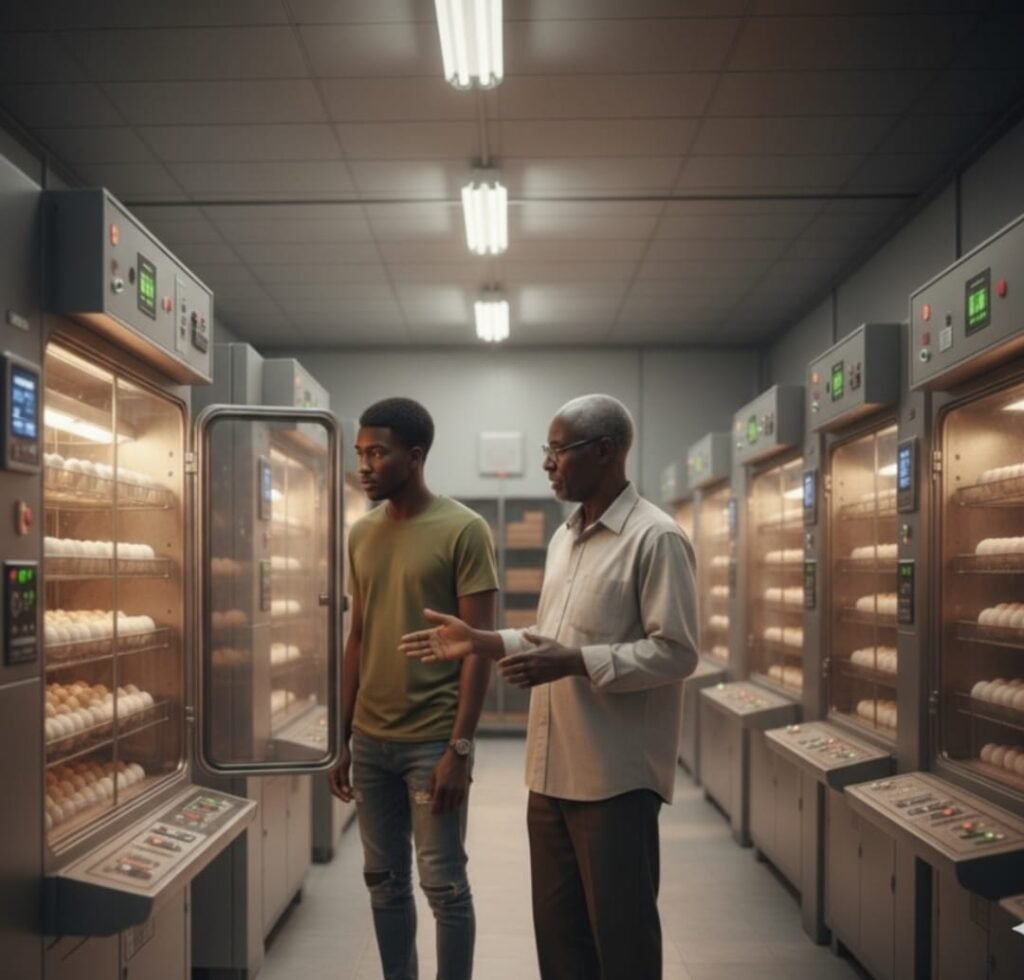
You can: An egg may seem small, but it can be the beginning of a dream that multiplies.
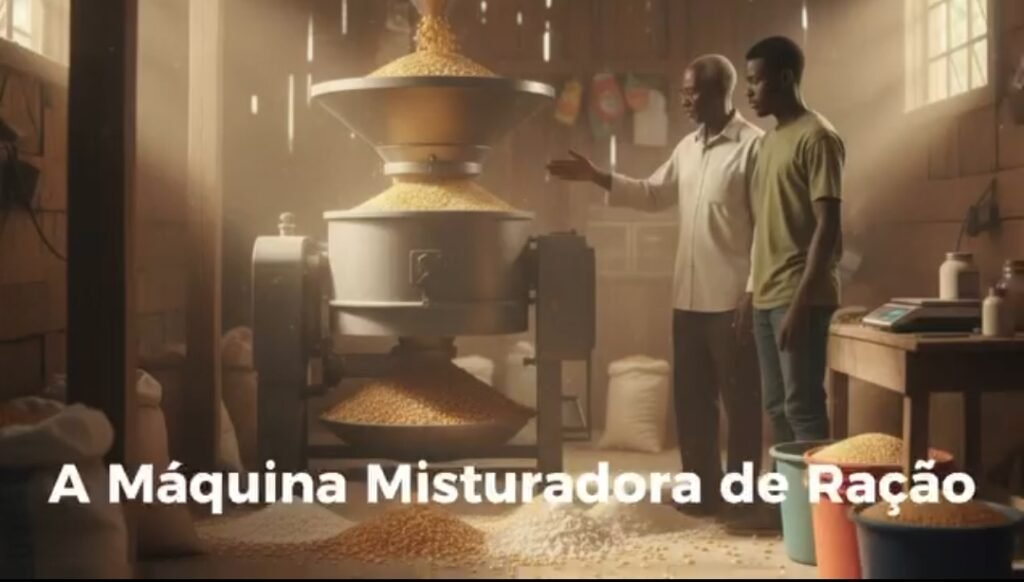
You can: What today seems like just corn could tomorrow be the basis of a business that fuels dreams.
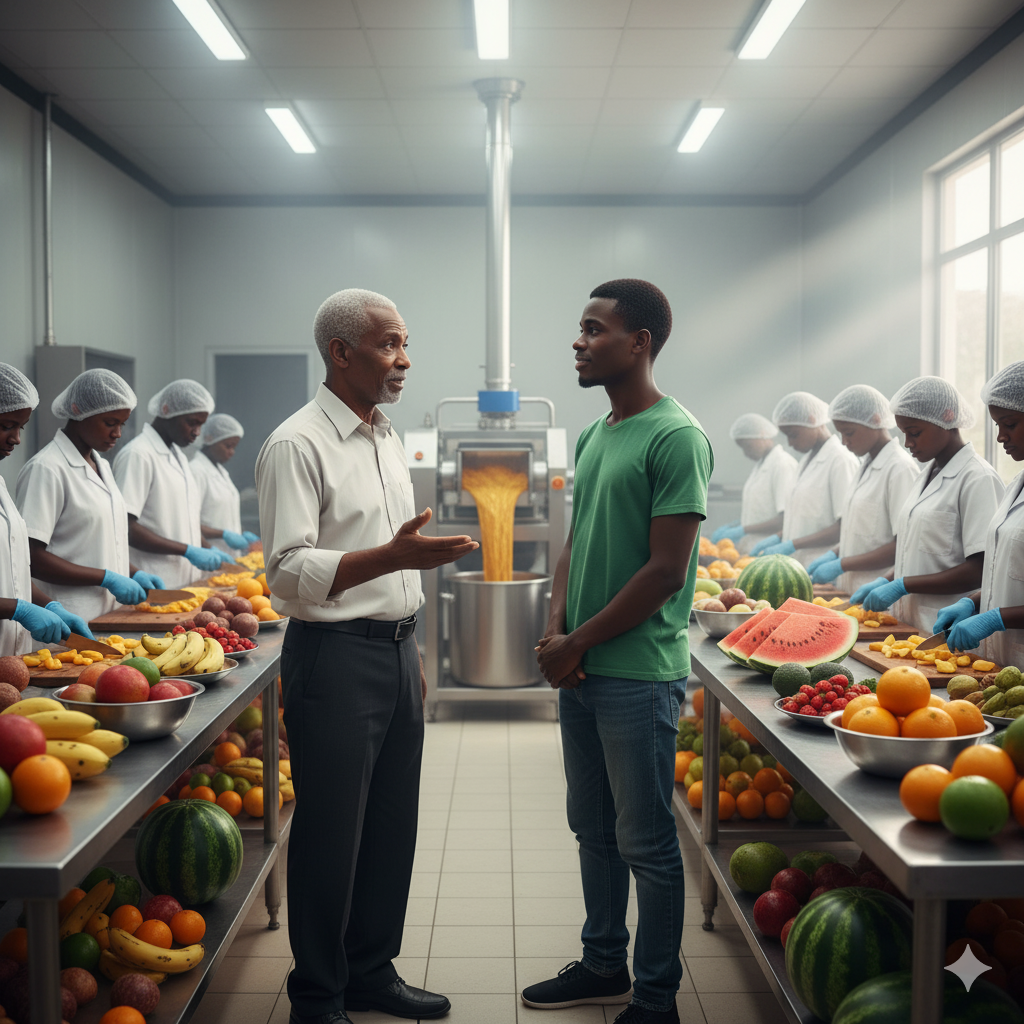
After touring the incubators and the feed, Mr. Ernesto led Salimo to an area where the air was sweet, filled with the scent of ripe fruit. Young men worked in gloves and caps, cutting, washing, and preparing mangoes, but also pineapples, avocados, oranges, tangerines, strawberries, watermelons, passion fruit, tamarinds, maçalas, and mafilwas. Fruits that in many markets across the country are lost to rot, were made the most of here.
The basins filled with colorful pieces, which were then ground into fresh pulp in machines. The PROSPERAR mentor explained:
— "Here we value what is often lost. How many times have you seen fruit spoil in backyards or at markets? Because every lost fruit is also a lost business."“
Salimo remembered the piles of wasted fruit he'd seen around town. There, he understood that entrepreneurship often meant avoiding waste and transforming abundance into income.
— "A young person can start small," Ernesto continued. "With a simple blender and proper hygiene, they can produce pulp, package it, and sell it in the neighborhood. Restaurants, bakeries, and even schools are looking for these products."“
For Salimo, it was like opening a new door: the fruits, previously seen as banal, turned out to be hidden gold.
You can: What rots on the ground today could sustain your table and your future tomorrow.
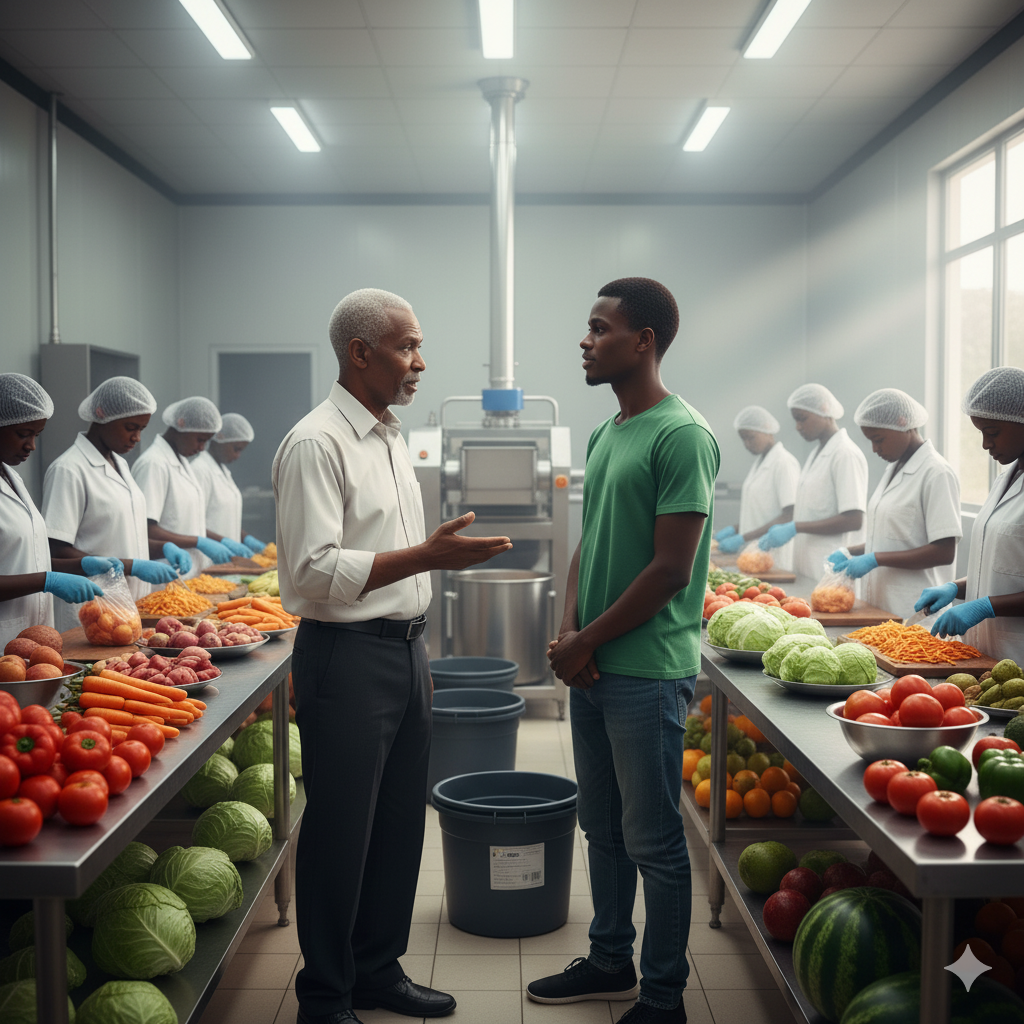
The next space Mr. Ernesto showed Salimo was a cool area, where young people worked at stainless steel tables. There, baskets were filled with tomatoes, cabbage, carrots, onions, lettuce, and peppers. Other buckets held sweet potatoes, cassava, and pumpkin. The environment was clean, organized, and full of energy.
— "Here we process vegetables," explained the PROSPERAR mentor. "What you see in the market almost always spoils due to lack of preservation. But when we wash, cut, and package ready-made portions, the value multiplies. Families want convenience, restaurants need speed, and supermarkets demand quality."“
Salimo paid close attention. He watched as young people sliced carrots into thin strips, packaged washed cabbage, and prepared packets of ready-made soup with a variety of vegetables. He realized this wasn't a luxury, it was a necessity: saving time, reducing waste, and offering healthy food at an affordable price.
The mentor added: "Any young person can start small: a clean table, a knife, plastic bags, and discipline. If you organize well, you can supply the neighborhood, school cafeterias, or small restaurants. It's turning simple things into income."“
Salimo understood that even common vegetables concealed business opportunities. It wasn't just about selling food, but about offering solutions.
You can: What seems like just a cabbage today could be the root of a sustainable business tomorrow.
By following the mentor, Salimo He entered a cold room. The frigid air made his skin crawl, but he soon realized that this environment hid one of the greatest weapons against waste: conservation.
— “Here we have the freezing system,” explained Mr. Ernesto, the mentor of the THRIVE. "It's thanks to it that we avoid wasting our produce. Without cold, much of what we harvest or process would spoil within a few days. With it, we extend the shelf life of our products and guarantee quality to our customers."“
Salimo He looked around. Organized boxes held chicken, duck, and turkey, pre-cut vegetables, and pulped fruit. It was as if time had stopped inside. Everything was ready to be sold whenever there was demand, without rushing or waste.
The mentor continued: "Many young people think that freezing is only for large companies. But a small freezer is enough to get started. You can store slaughtered chickens, fruit pulp, and packaged vegetables. This allows you to sell quickly, without losing value, and serve customers who demand freshness."“
Salimo He realized that the cold wasn't his enemy, but his ally. If he had learned to fear it on the street, now he discovered that it could be a tool for prosperity.
You can: The cold that made you suffer yesterday could be the driving force behind your business today.
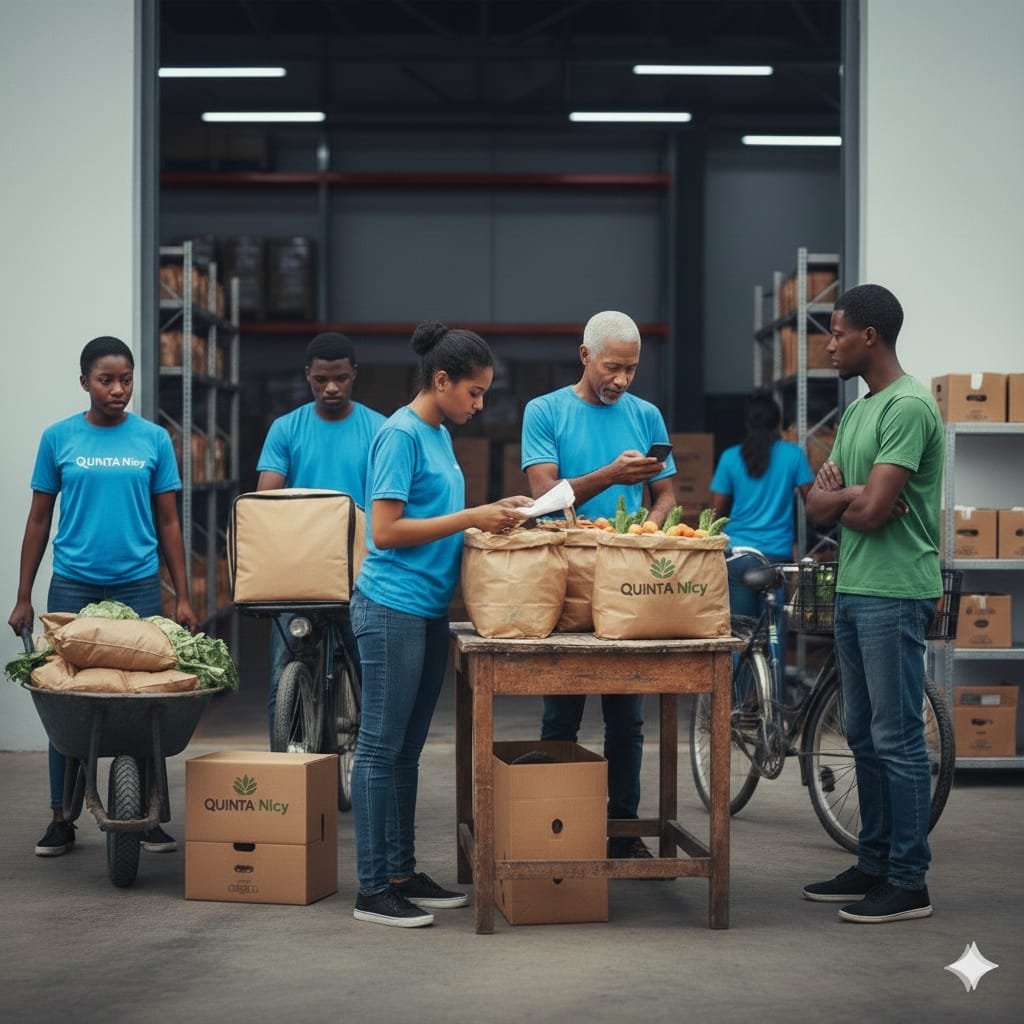
At the exit of the conservation area, Mr. Ernesto took Salimo to the front of the Quinta Nicy. There, the movement was intense: young people came and went with boxes, bags, and packages. Some rode bicycles, others on motorcycles, some even walked with wheelbarrows. The place seemed like a station of opportunity.
— “This is the logistics and delivery part,” explained the mentor of THRIVE. “Producing is important, but delivering is where many young people find their first business.”
Salimo He was fascinated. He saw boys and girls, almost his own age, organizing routes, checking lists, and heading off to different neighborhoods. Each carried not only goods but also dreams of independence.
The mentor continued: "You don't need much to get started. With a bicycle, you can already make deliveries in the neighborhood. With a motorcycle, you can go further. The customer pays not only for the product, but for the convenience of receiving it at home. Here, many young people start as delivery drivers and then progress to managing their own small logistics service."“
To Salimo, that scene was revealing. He realized that logistics wasn't just paper and stamps: it was youth in motion, transforming time and energy into profit.
You can: A bicycle can be more than just transportation. It can be the start of your delivery business.
At the exit of the conservation area, Mr. Ernesto took Salimo to the front of the Quinta Nicy. There, the movement was intense: young people came and went with boxes, bags, and packages. Some rode bicycles, others on motorcycles, some even walked with wheelbarrows. The place seemed like a station of opportunity.
— “This is the logistics and delivery part,” explained the mentor of THRIVE. “Producing is important, but delivering is where many young people find their first business.”
Salimo He was fascinated. He saw boys and girls, almost his own age, organizing routes, checking lists, and heading off to different neighborhoods. Each carried not only goods but also dreams of independence.
The mentor continued: "You don't need much to get started. With a bicycle, you can already make deliveries in the neighborhood. With a motorcycle, you can go further. The customer pays not only for the product, but for the convenience of receiving it at home. Here, many young people start as delivery drivers and then progress to managing their own small logistics service."“
To Salimo, that scene was revealing. He realized that logistics wasn't just paper and stamps: it was youth in motion, transforming time and energy into profit.
You can: A bicycle can be more than just transportation. It can be the start of your delivery business.
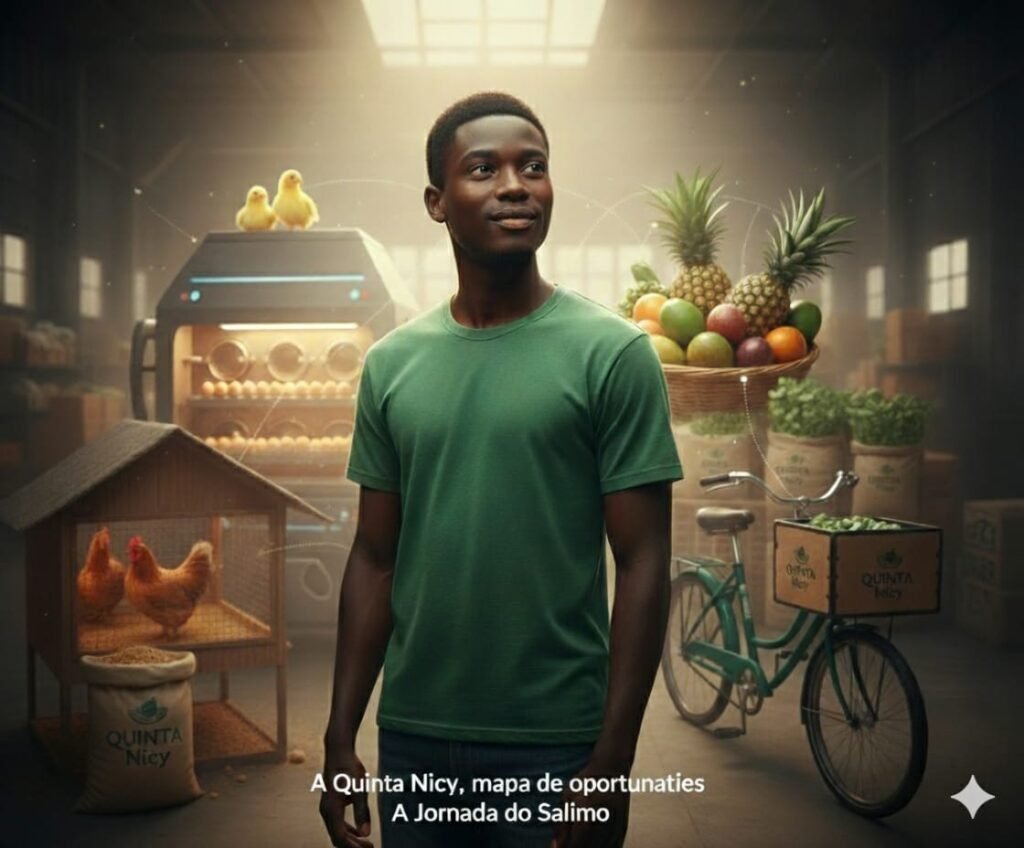
When he left the Quinta Nicy, the heart of Salimo knocked like someone who discovers a secret. He hadn't just seen birds, machines, or products. He had walked through corridors of the future.
In the open coops, where chickens, ducks, turkeys, quail, wild chickens, and pigeons roamed freely, he didn't just see animals—he saw steps. Steps that any young person could climb, starting small and growing with discipline.
In the incubators, he realized that a simple egg could be multiplied into life, and that multiplied life could be a business. It was as if each fragile shell held within it a promise of prosperity.
In the feed mixer, the sound of the paddles wasn't just the sound of grain, it was the music of independence. Each bag of local feed was also proof that young people didn't need to wait for outside solutions to build a livelihood.
In the fruit sector, colors and aromas showed him that pineapples, mangoes, avocados, passion fruit, tamarinds, strawberries, mafilwas, and so many other riches of Mozambique were not doomed to decay. They could become pulp, yield, and future bottling.
In the cut and packaged vegetables, he understood that even the simplest gesture, washing a cabbage, slicing a carrot, preparing a ready-made soup — could be transformed into a business if there was organization.
In the freezing cold, he discovered that the cold wasn't just a harsh reminder of the streets: it could be an ally of growth, storing food for tomorrow and ensuring quality in the market.
And in logistics, in front of the gate, he saw the spectacle of youth in motion: bicycles, motorbikes, handcarts carrying boxes, connecting production and consumption, proving that Delivery is much more than delivery, it is a bridge to dignity.
Salimo He then understood that Quinta Nicy wasn't just a farm. It was a cartography of opportunities. Each sector visited was a possible route. Every machine, every bird, every young person in motion pointed in the same direction: prospering is not waiting, it is starting.
And as he walked through the exit gate, the world no longer seemed the same. Because once your eyes are opened to opportunities, they never go back to being small.
You can: Mozambique is a fertile land of dreams. Those who dare to plant effort reap the future.
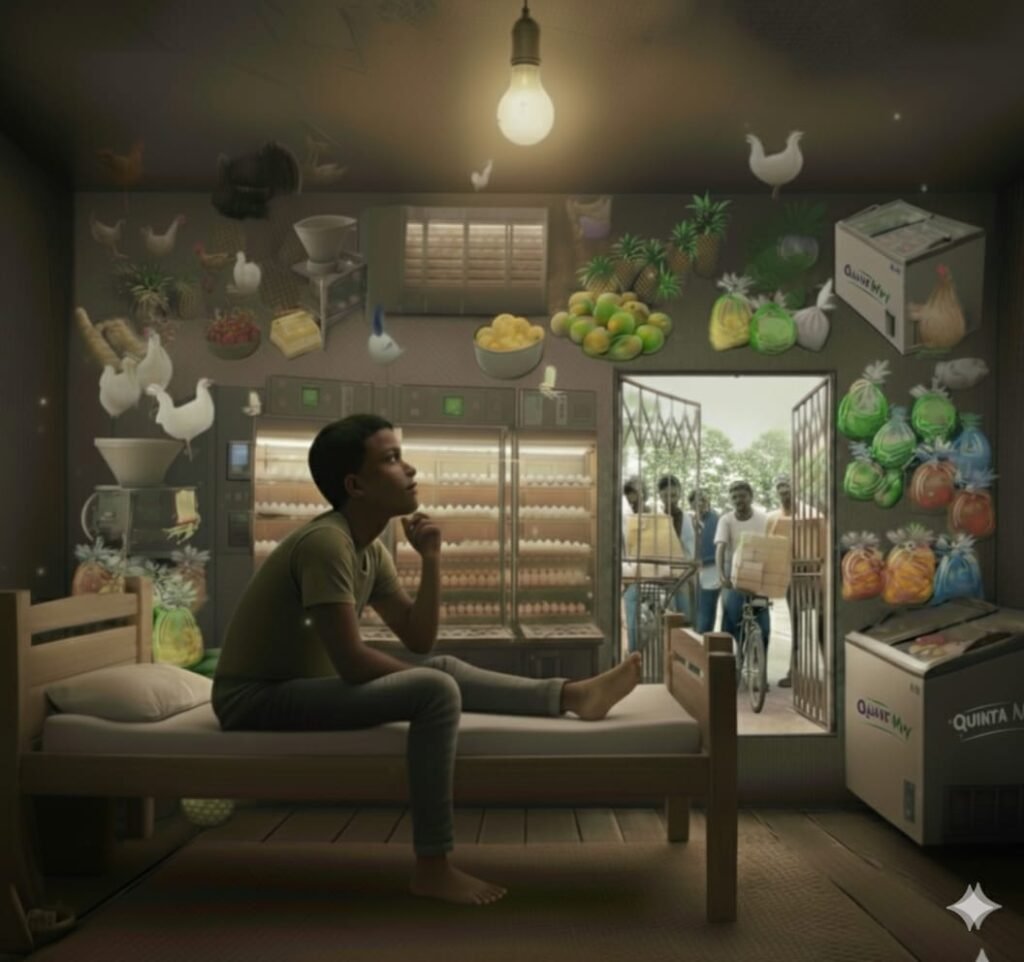
Night fell heavily on the neighborhood, but inside Salimo the silence was inhabited by voices and images. Lying in his simple corner, he stared at the dark ceiling as if it were a movie screen. There, scenes from the visit to Quinta Nicy: the yards full of chickens, ducks, turkeys, quails, and pigeons; the incubators pulsing life into eggs that promised a future; the feed mixer working like the heart of independence; the sweet smell of mangoes and pineapples being turned into pulp; the carrots and cabbages washed and packed with care; the freezers storing food for tomorrow; and, finally, the young people on bicycles and motorbikes leaving through the gate, carrying boxes like those carrying hope.
Each image was not just a memory—it was a promise. It seemed to him that the night wind was whispering in his direction: “This could be yours too.”
His body begged for rest, but his mind refused. It was as if something inside him had awakened and there was no way to put it back to sleep. He felt restless, not with fear, but with anticipation. The invisible street boy, so often forgotten, now discovered there was a place where even he could fit, grow, and dream.
Salimo closed his eyes, not to sleep, but to sketch the future. And the more he thought, the more he realized: that night was not one of sleep, but of seeds.
You can: When the heart begins to sow images of the future, rest gives way to plans.

The early morning cold entered through the cracks in the house, and Salimo He pulled the worn cloth over himself. At that moment, the memory came back to him like a blow: the street. He remembered the nights when the hard floor was his only bed, the times he'd searched for scraps of bread in the trash cans, the days when hunger made his body tremble and the future seemed to disappear.
He thought quietly: “"If I had had just one chicken back then, maybe the story would have been different. An egg a day would have made all the difference."”
The memory hurt, but something inside him wouldn't let him sink in. What he had seen in Quinta Nicy had lit a new flame. The past screamed, yes, but the present began to speak louder. It was as if each image from the visit pushed the pain back and made room for something greater: hope.
Salimo He understood that he couldn't change yesterday, but he could decide tomorrow. And that decision was in his hands, not in the hands of fate. The boy who had once learned to survive amidst cold and hunger now discovered that he could also learn to thrive.
The fire within him grew. It was no longer the fragile flame of someone who only dreams. It was the beginning of a blaze of determination.
You can: You are not a prisoner of what you have lived. You are the builder of what you decide to live from now on.
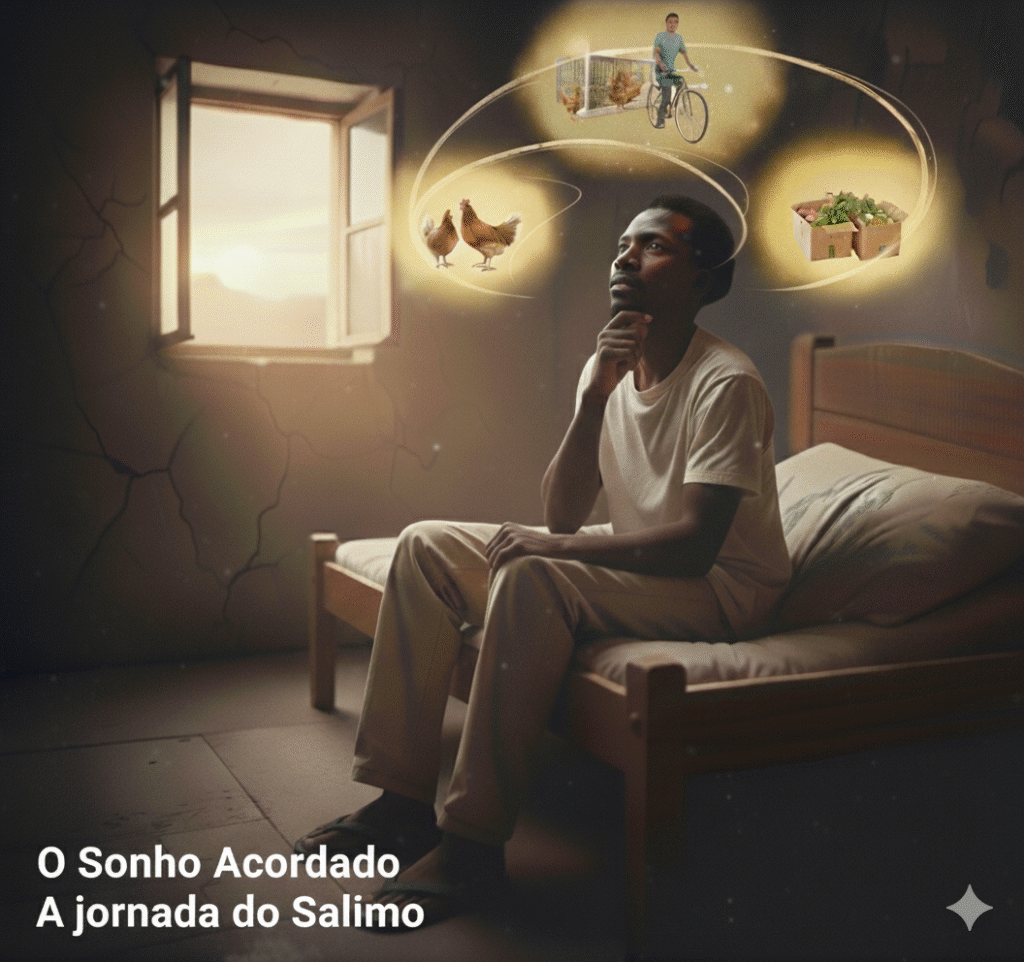
The words of Mr. Ernesto, mentor of PROSPERAR, echoed in his chest as if they were hammered:
— “Every sector you saw today can be a business. The secret is to get started.”
Lying in the silence of the night, Salimo repeated these phrases, chewing them over like food for his soul. They weren't just pretty words, they were reality. He'd seen it with his own eyes: young people just like himself, carrying boxes, packing vegetables, making deliveries by bicycle. They weren't different, they weren't stronger, they weren't smarter. They had simply taken the first step.
And there, for the first time, Salimo decided: he didn't want to be just a spectator of life. He didn't want to spend his time dreaming without taking action. He wanted to write his own story.
The dream that had always seemed fragile was now awake. It was no longer a child's reverie, but a project for the future. Deep down, he understood something essential: entrepreneurship doesn't start with money, it starts with vision. The most important capital wasn't in one's pocket, but in one's head and heart.
He turned to the side, his eyes still open, and smiled to himself. He had no incubator, no chicken coops, no delivery bike. But he had the most precious thing: the certainty that it was possible. And no one could take that certainty from him.
You can: The first step for an entrepreneur is simple and powerful: believing that your dream is possible.
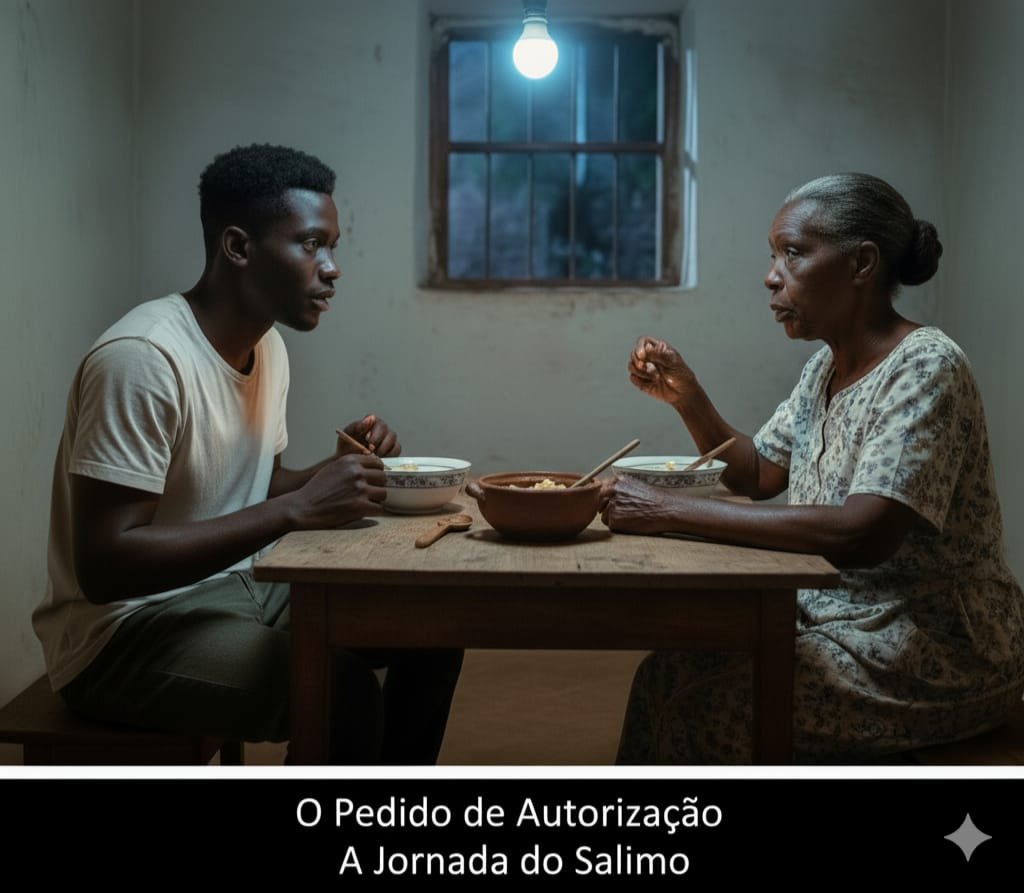
The morning after that sleepless night, Salimo woke up different. His body was the same, but his mind was full of plans. He didn't want to wait for the days to pass in silence. He needed to start, even if small.
But there was one thing that bothered him: he wasn't alone. He lived in the house of the woman who had taken him in, and he couldn't start anything without first talking to her. Respect was the least he could offer the woman who had opened her doors to him when he had nothing.
With his heart racing, he waited for the right moment. At dinnertime, he summoned up the courage:
— "Mom... I wanted to talk to you. Yesterday, when I went to Quinta Nicy, I saw that I could also learn and start something. Could I use a corner of the yard to raise some birds?"“
The lady slowly put down her spoon and looked at him in surprise. It wasn't common to hear young people asking for space to work instead of asking for things to spend.
— “Do you really think you can handle that?” he asked.
Salimo took a deep breath. “I don’t have much, but I have the will. If you let me try, I promise to take care of it responsibly.”
The lady's silence lasted for seconds that seemed like hours. Until, finally, she smiled slightly:
— "If your heart asks, then start. Just don't forget: commitment is as important as dreams."“
You can: Respecting those who support you is the first step to growing with firm roots.
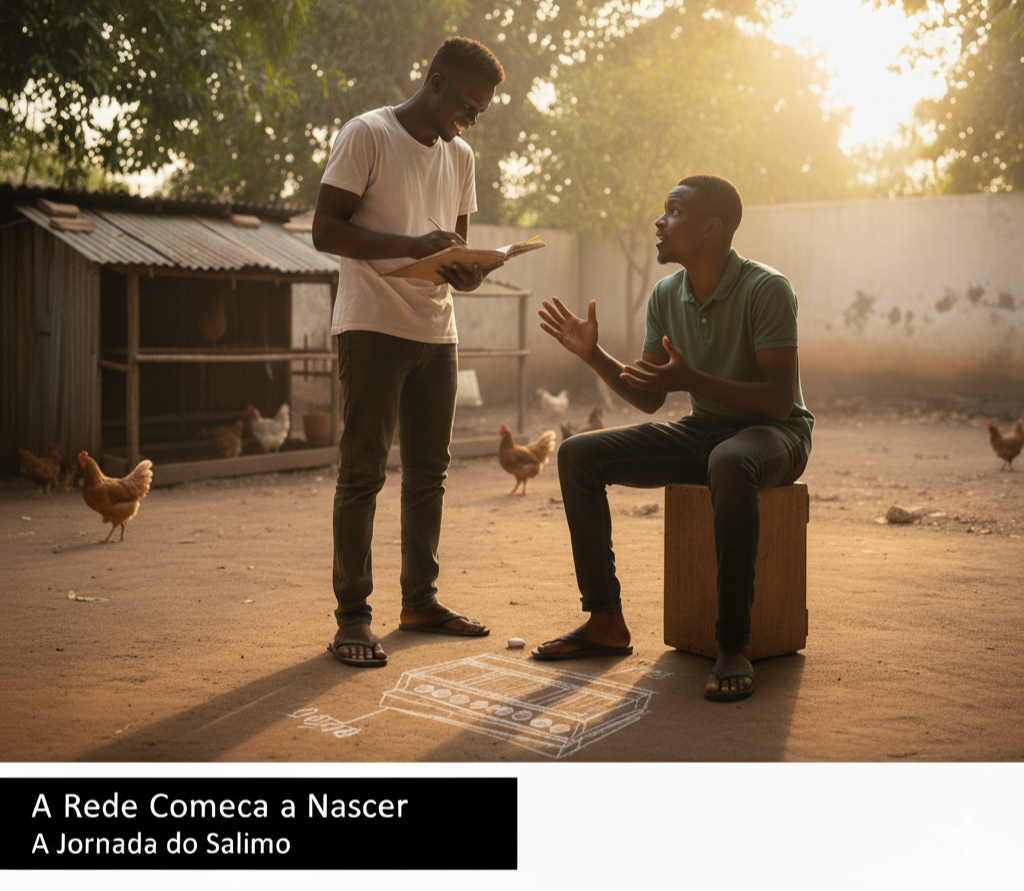
After jotting down his first ideas in his notebook, Salimo realized he needed to be realistic. Fattening chickens required a lot of feed, and he couldn't yet afford that cost. It was then that he remembered a quote from Mr. Ernesto, PROSPERAR's mentor: "In the beginning, choose the path that requires the least and brings the greatest immediate return."“
Upon reflection, he realized he could start with fertile eggs. If he had good hens and a strong rooster, he could produce fertile eggs, which are worth more than table eggs. These eggs could be sold to anyone with an incubator.
In the neighborhood, there was a childhood friend named Hamza, the son of a better-off family. His father had been talking for a while about buying an incubator. Salimo ran to his house, full of enthusiasm. "Hamza, I have an idea. I produce fertile eggs. You keep the incubator and turn those eggs into chicks. Then we'll sell them together."“
Hamza's eyes lit up. It wasn't just friendship, it was vision. He realized that alone he would have difficulty ensuring quality eggs for the machine. But with Salimo, the wheels could start turning.
There, between two young people with different backgrounds, a partnership was born: one would care for the chickens, the other would transform eggs into new life. It was the first thread of the web that was being formed.
Practical lesson for the young reader: don't try to do everything alone. Seek out friends with different resources or circumstances than you and build trustworthy partnerships.
You can: A shared dream grows faster than a dream kept alone.
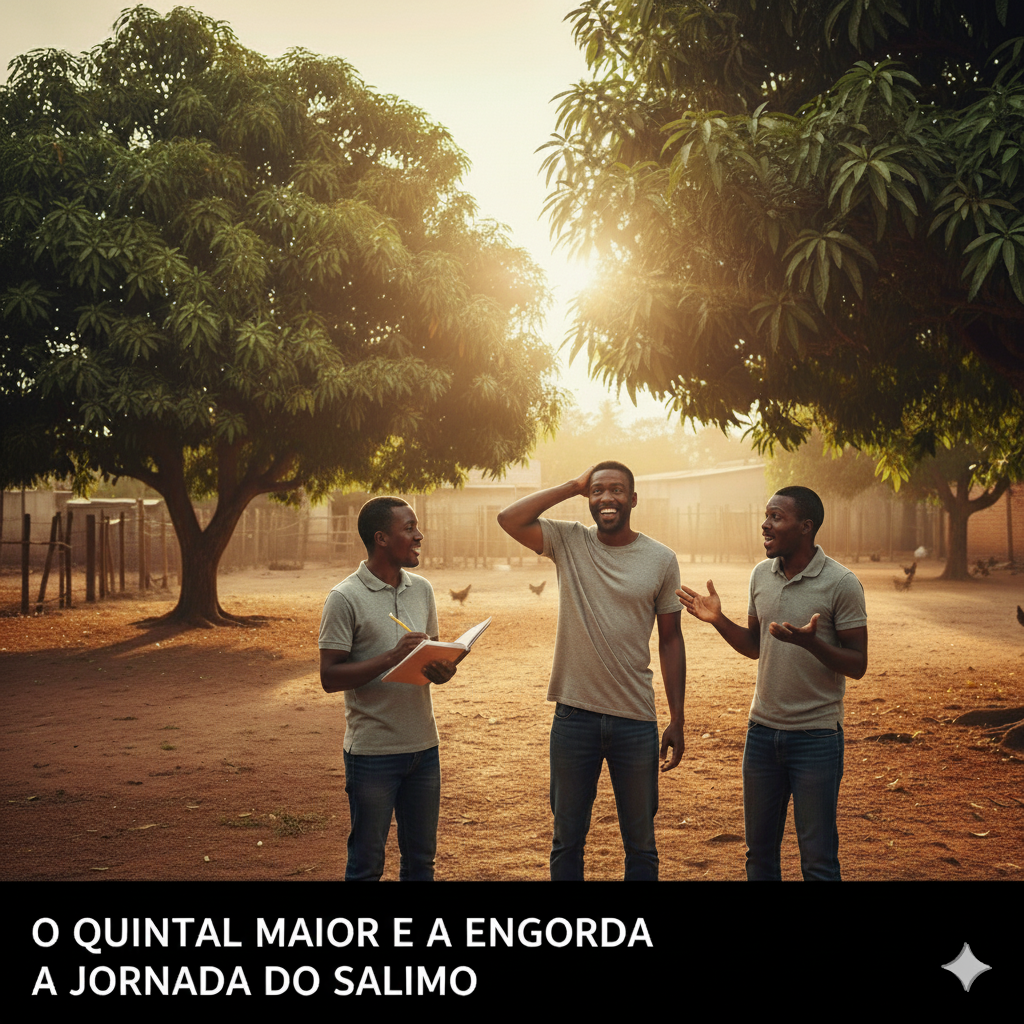
As the plan began to take shape, Salimo and Hamza realized that one important piece was still missing. Fertile eggs would hatch into chicks, but… where would they fatten all those birds? Salimo's backyard was small, and Hamza's house didn't have enough space.
That's when they remembered Beto, a friend known for his good nature and for helping his father grow vegetables. His house had a large backyard, shaded by mango trees and space to set up open thickets.
The two of them went to him and shared the idea. Beto listened in silence, scratched his head, and then smiled: — “You guys keep the eggs and the incubator. I'll handle the fattening. I've always enjoyed taking care of animals. If we work together, we all win.”
The partnership was complete: Salimo would provide fertile eggs, Hamza would hatch them into chicks using the incubator, and Beto would take care of fattening them until the birds were ready for market.
Later, under the guidance of the PROSPERAR program at Quinta Nicy, they realized that this model was not only practical but also sustainable: each person focused on what they were best equipped to do. It was like assembling a chain, where each link made the whole stronger.
Practical lesson for the young reader: assess the resources available to the community. If you don't have the space, look for someone who does. Often, the solution lies in joining forces.
You can: An empty backyard can be transformed into a fertile field of opportunities.








Promoting economic and social inclusion across the country
Accelerating sustainable growth of the local economy
Valuing Mozambican identity and production
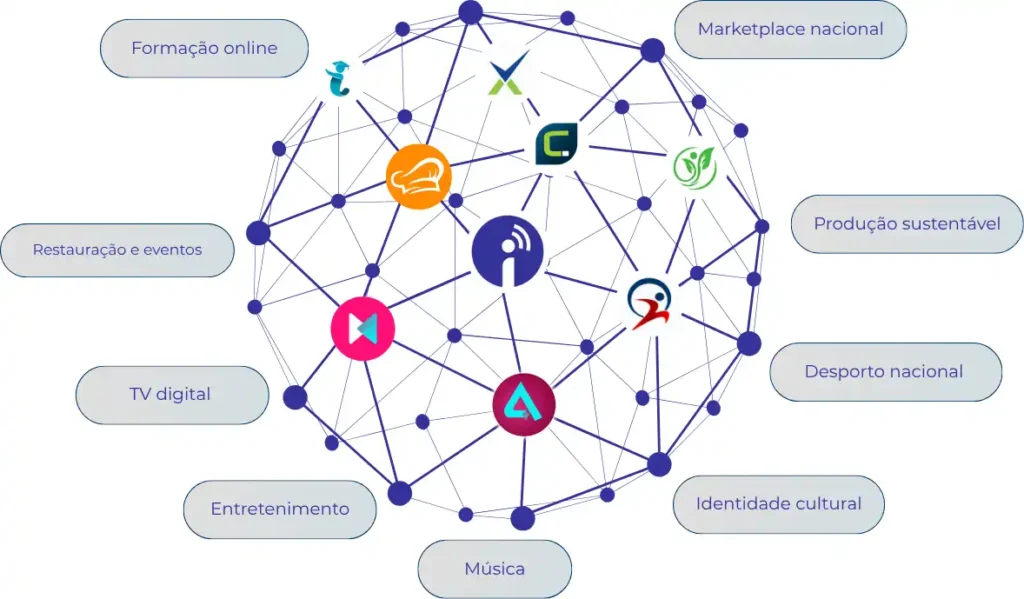
Digital television that gives voice to African culture with educational, artistic and independent content.
Music streaming platform that values local artists and generates revenue from culture.
Turning sport into a mobilization tool to enhance the national product.
E-commerce in durable goods.
space for sustainable poultry and agro-industrial production
Training unit with courses, mentoring and links to the market.
B2B platform for purchasing, supplying and supporting micro and small businesses.
Investors who believe in the sustainable development of Mozambique
Partners who strengthen our digital and physical infrastructure
Organizations committed to training and empowering young people
Digital solutions that facilitate transactions and extend the reach of local commerce
Partners who strengthen the national production chain and value "Made in Mozambique"

 English